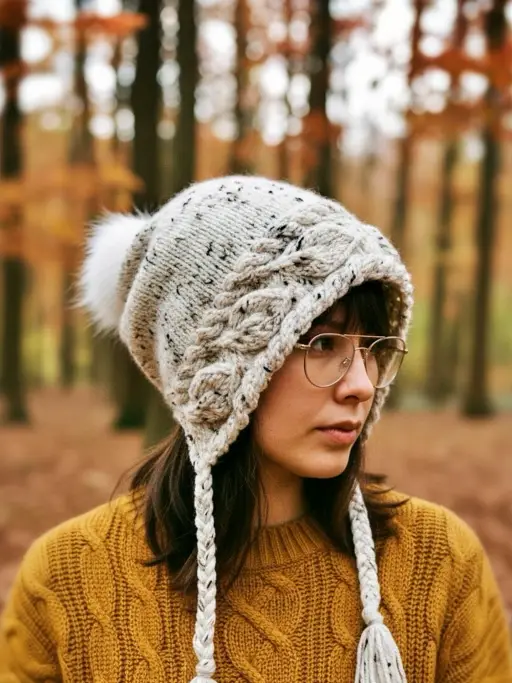
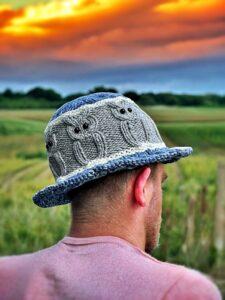
This beanie is not worked using standard hat construction. Instead, it’s intentionally designed to unfold in a different way, allowing the cables, shaping, and fit to develop gradually as you knit. If the construction feels unusual at first, that’s okay. Follow the instructions, trust the process, and keep going. Once all the steps come together, the design reveals itself as a warm, well-fitted cable knit beanie with a comfortable double-thick brim that adds both structure and extra insulation.



If you need help with sts, check the Abbreviations section. I’ve included descriptions of how to make them and embedded videos where I could. Scroll down the page or use the Table of Contents.
If you would prefer the printable version of the pattern, I have a number of online retailers you can buy it from including my online KweenBee on Shopify, Etsy, and Buy Me A Coffee. I also have the paperback booklet and Kindle versions available on Amazon.
Another way to avoid ads and pop-ups, get instant, PRINTABLE downloads of this pattern and others, is by becoming a Member. When you become a Website Supporter at $4/month, you’ll gain access to exclusive member only posts on Buy Me A Coffee. You can download as many patterns as you like for the same $4 each month. You can go to this page to learn more, become a member and support my work… Exclusive Member Area
Don’t forget to share this pattern with anyone you think may like it on your social media accounts. It’s free for everyone to use and it’s a great way to support my work without paying a single cent. I even included the handy share button right here 👇🏼
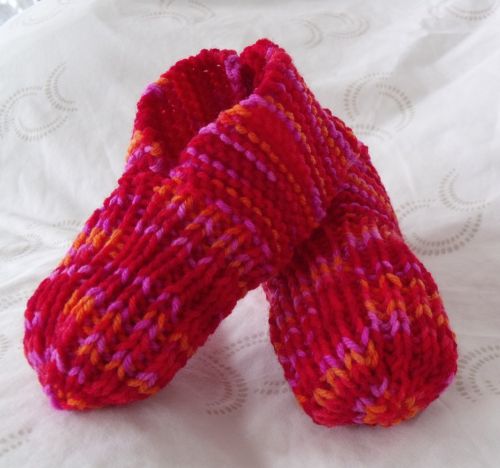
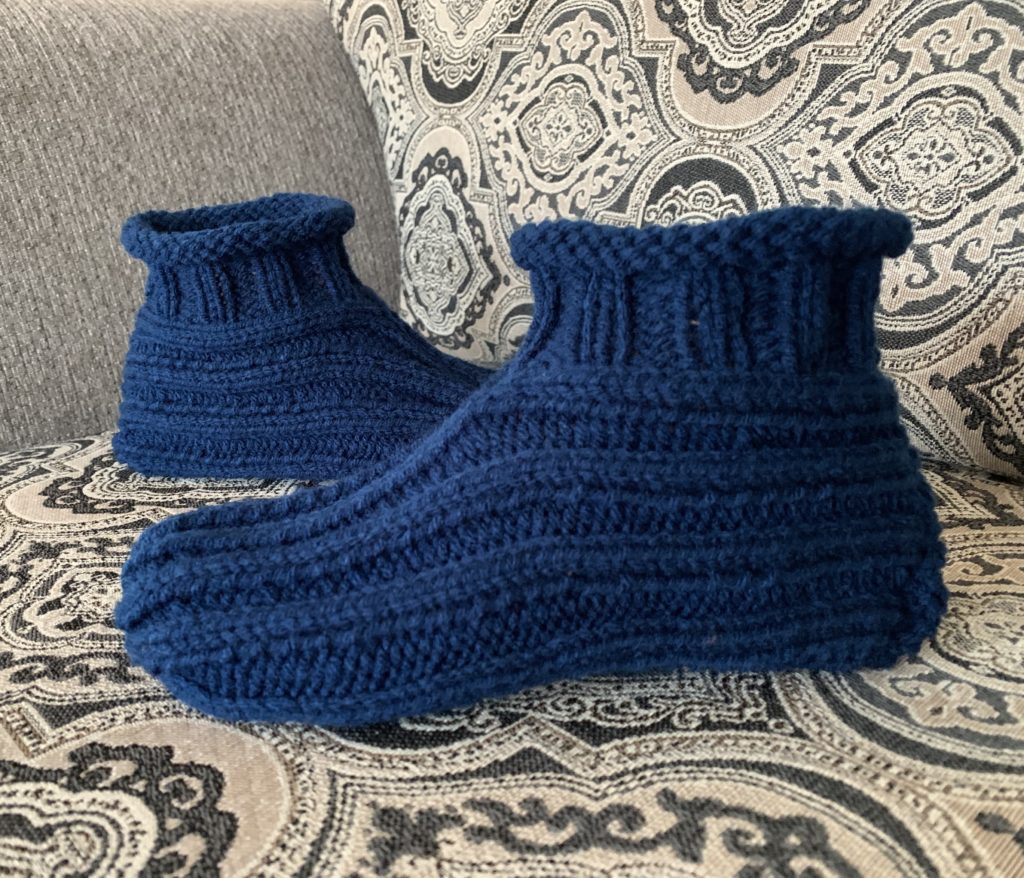
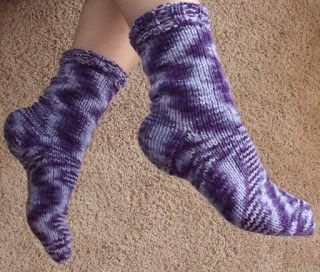
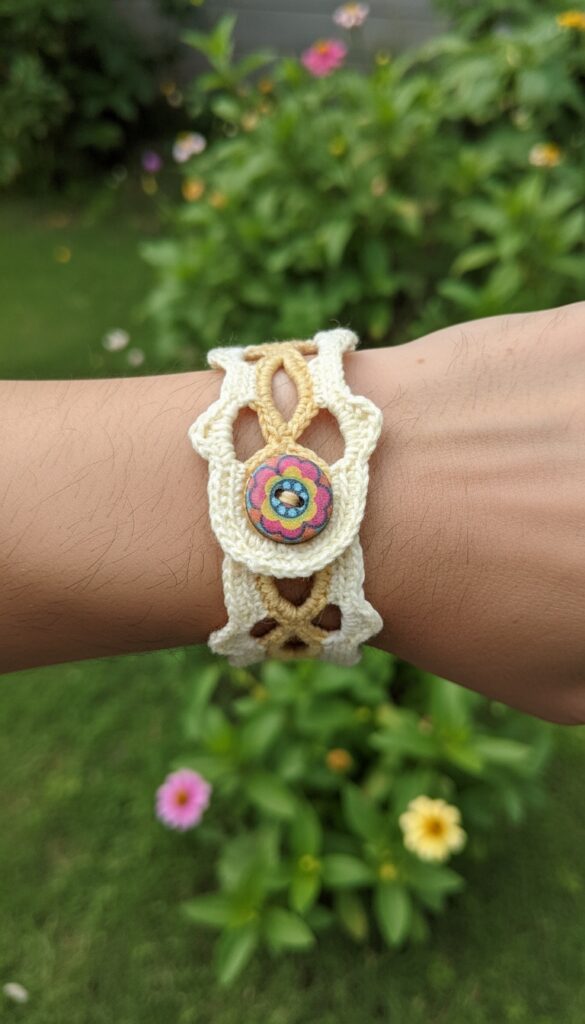
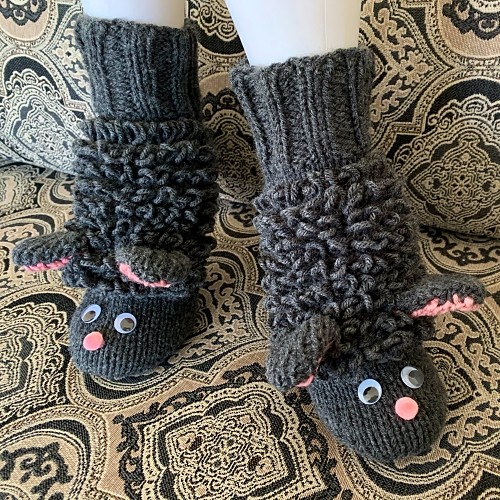
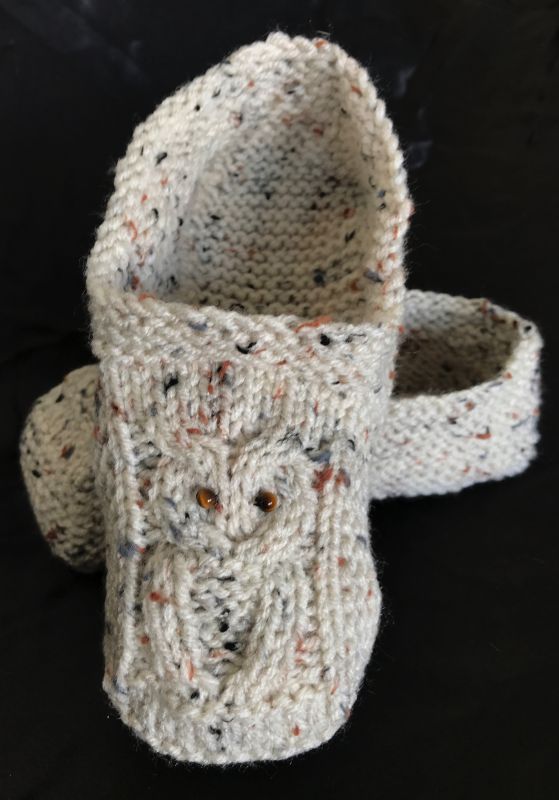
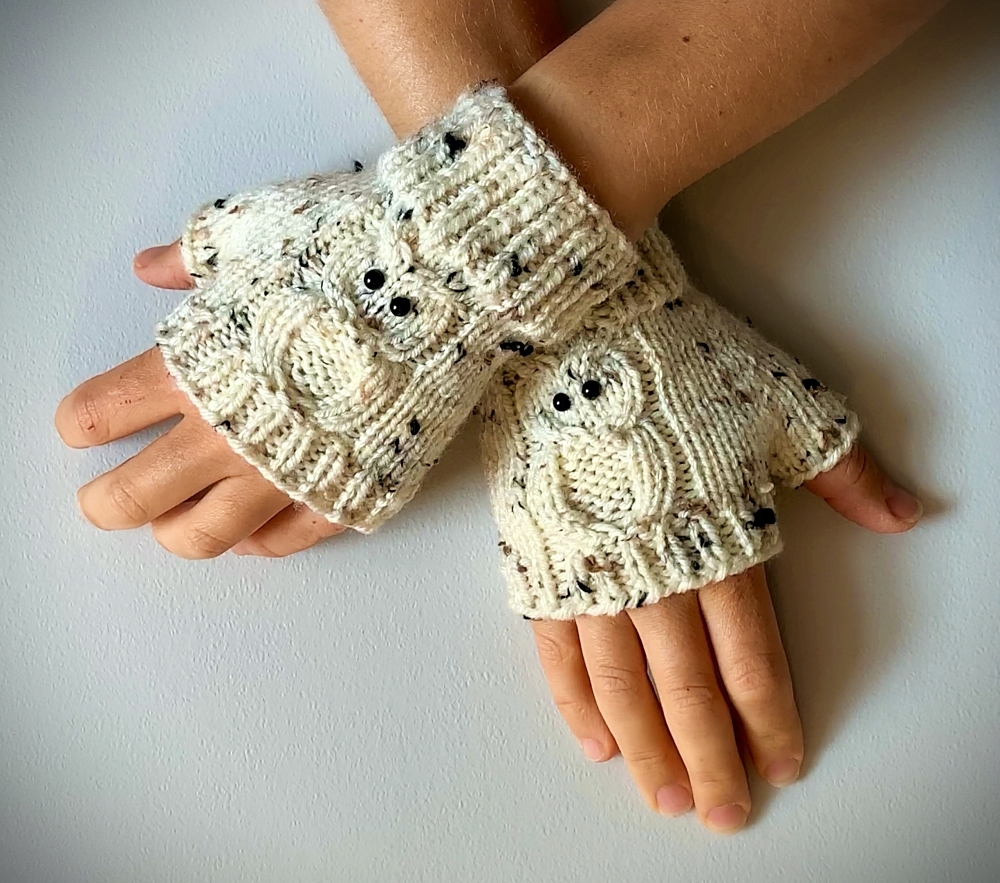
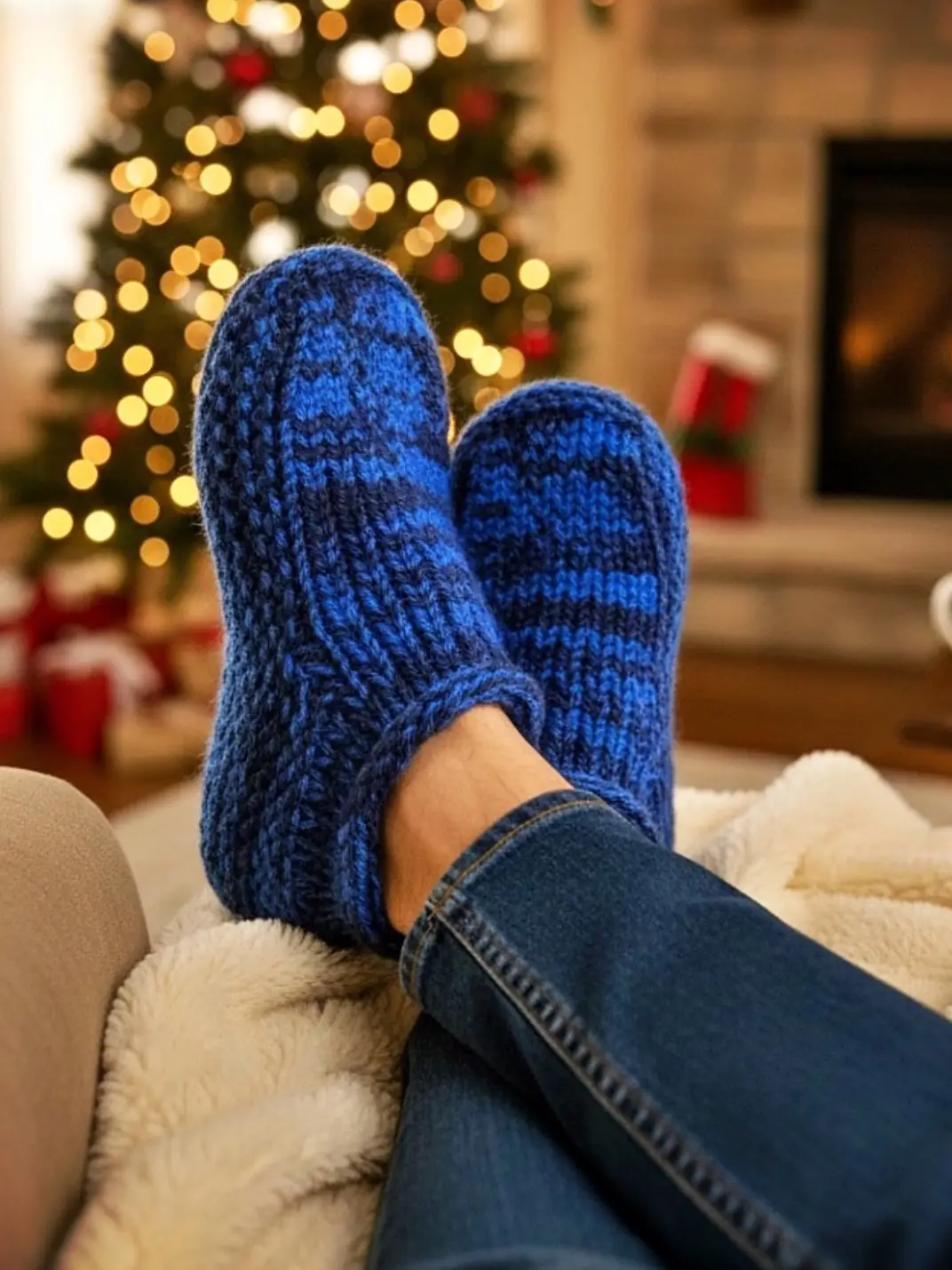
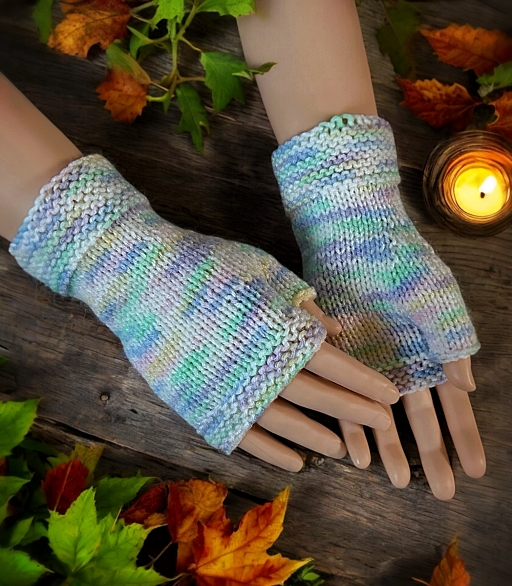
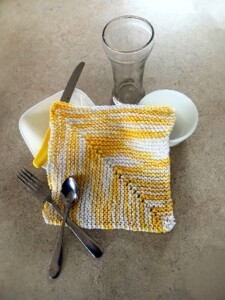
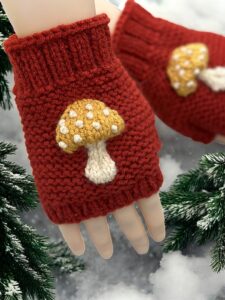
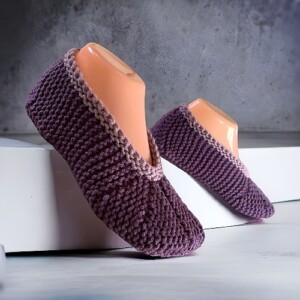
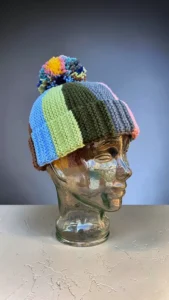
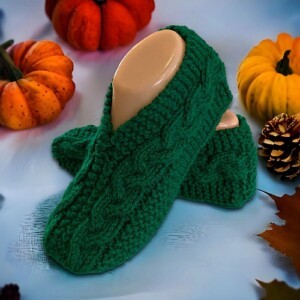
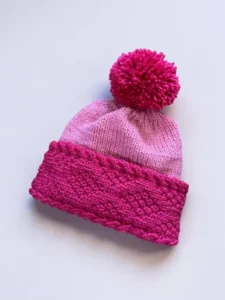
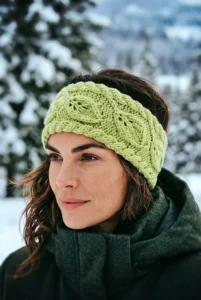
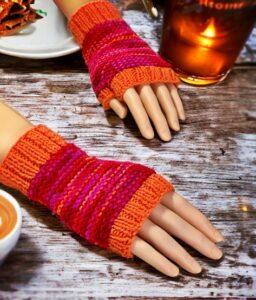
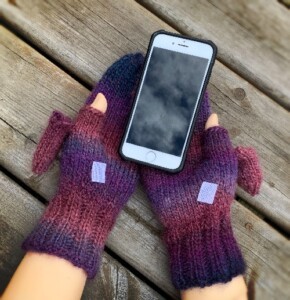
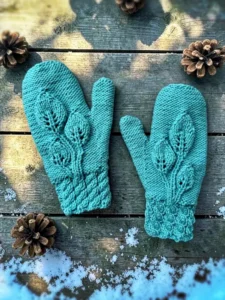
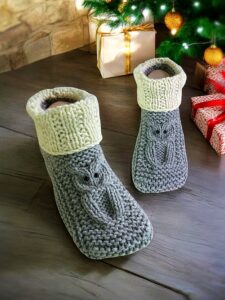
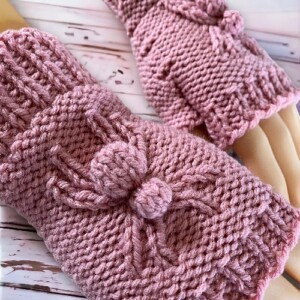
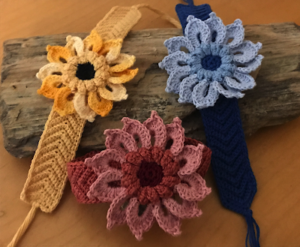
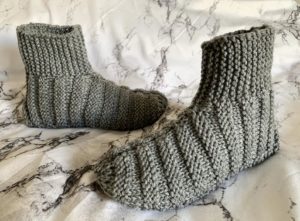
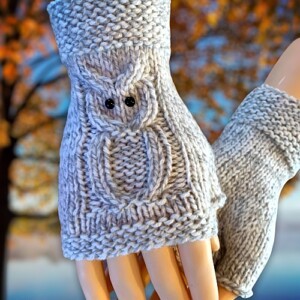
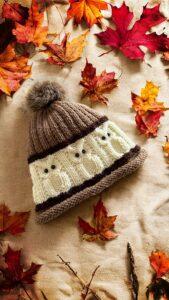
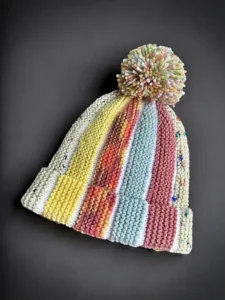
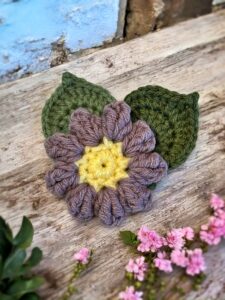
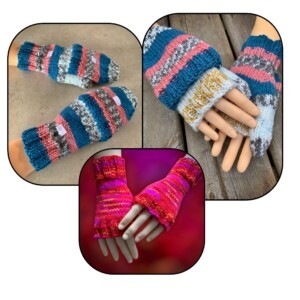
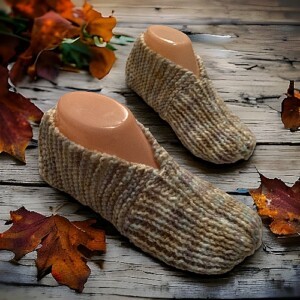
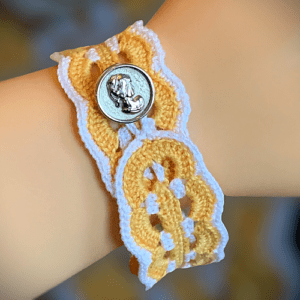
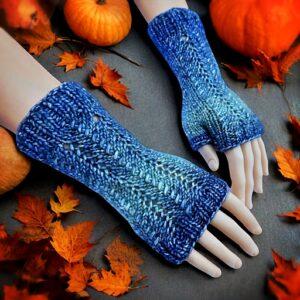
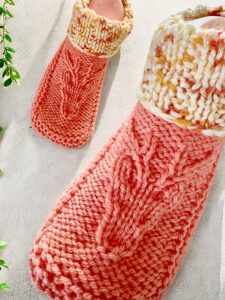
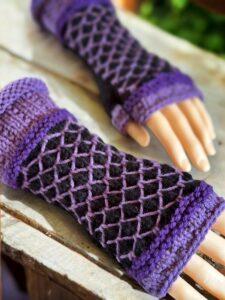
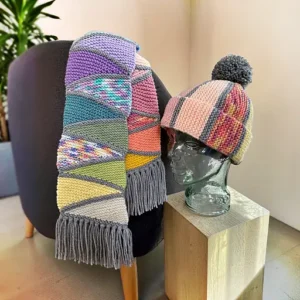
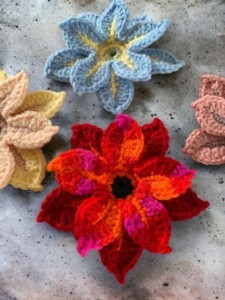
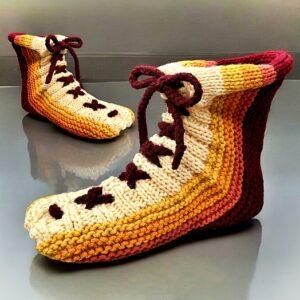
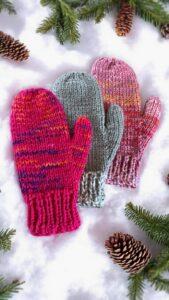
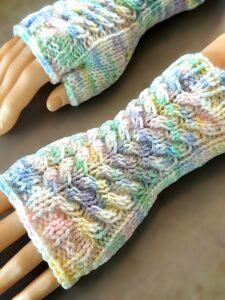
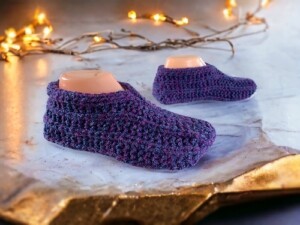
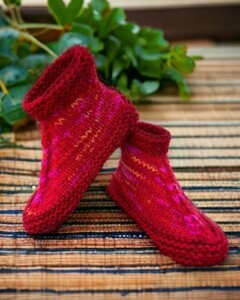
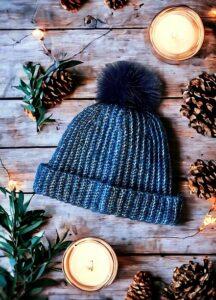
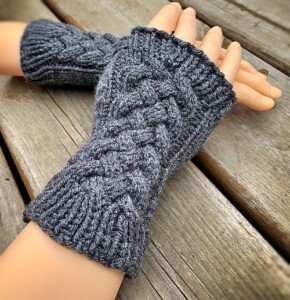
This pattern is inspired by 3 patterns that I previously wrote. I’m in a habit of combining different elements of my patterns together to make a completely new thing. This is a bringing together of my Easiest Beanie You’ll Ever Knit, Autumn Leaf Fingerless Gloves, and my Cozy Cable Brim Bobble Beanie. You can see by the photos below, how the elements have come together.
Clicking on any of the pics will take you to the pattern 😉

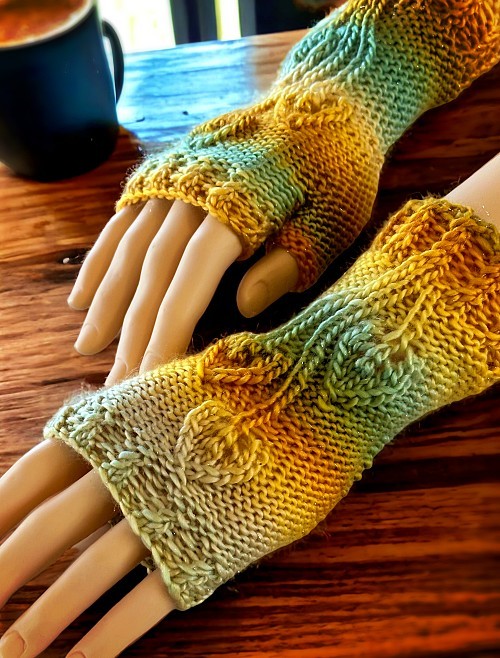

I also wrote another hat pattern with the leaf pattern after I published this one. You can see my Leaves of the Shadow Glen Hat by tapping the photo below. I’m currently working on a headband with the same leaf motif. Hopefully that will get done soon. I’m also thinking of remaking the fingerless gloves to mitts that will match and a scarf. But those will be a while in coming.
Things you need
Worsted weight (AKA – 4 or medium) yarn – one standard ball (515 yards / 471 m) will be more than enough with yarn left over.
1 set of size 4 mm (US size 6) single pointed needles
Cable needle
Tapestry needle (to work in ends)
Bobble or pom pom of your choice. You can make or purchase one.
Gauge
With size 4 mm (US size 6) needles or whatever size you need to obtain the correct number of stitches and rows. Be sure to check your gauge. It doesn’t need to be exact but the closer the better.
In garter st
17 sts = 4 inches or 10 cm
34 rows = 4 inches or 10 cm
Sizing Notes
First things first: let’s figure out how big to make the hat. When you’re going by age and gender, the measurements are only approximate – especially for kids. Adult sizes are more standardized: small, medium, large, and extra large.
If the person’s head is handy, measuring it directly is always best. That said, knitting isn’t an exact science. It stretches and contracts as needed, especially with the garter stitch inside the brim this hat uses.
Child Sizing
Data is based on World Health Organization and pediatric growth standards. You can also do an online search for sizing if you believe it to be inaccurate. Other organizations located in the USA, UK, etc give sizes as being slightly larger. A gentle reminder that this is knitting and it does stretch to accommodate close measurements. Close IS usually good enough in this case.
This design is for children (5 ish) and older. The band around the brim is quite thick and a heads any smaller than 20 inches (51 cm) will be too wide to fit comfortably on the forehead.

Adult Sizing
Small/Medium – 21 to 22 inches (53.5 – 56 cm)
Large/Extra Large – 23 to 24 inches (57 – 61 cm)
Band
The band can be made as long as you like. It is what goes around the circumference of the head and naturally folds back on itself at the purl line between the garter section and cable portion. Each leaf, when matching the gauge as given, is about 2.25 inches (5.75 cm long). I found 9 leaves were a good length for a small/medium adult hat with 10 leaves fitting large/ex-large adult heads. Adjust accordingly for smaller sizes.
Cast on 28
Row 1: K9 P1 K4 P9 K5
Row 2: P4 C1B K8 P4 K1 P1 K8
If you need help with any of the stitches, there are videos in the Abbreviations section to show you. Click this link – Helpful Video Tutorials
Row 3: K9 P1 C4F P7 C1B P1 C4B
♥ Row 4: P4 K2 C1B K6 P4 K1 P1 K8
Row 5: K9 P1 K4 P4 P2tog M1 K1 M1 P3 K4 (the photos show the second M1 in this row).


Row 6: P4 K3 P3 K5 P4 K1 P1 K8
Row 7: K9 P1 C4F P3 P2tog K1 YO K1 YO K1 P3 PM1 C4B
Row 8: P4 K4 P5 K4 P4 K1 P1 K8
Please share this page!
More FREE patterns
Click the pic to read online!!



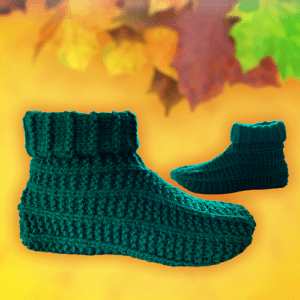
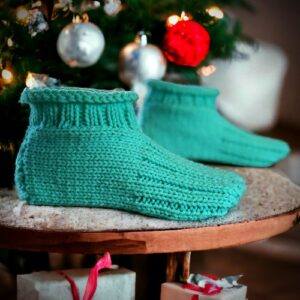
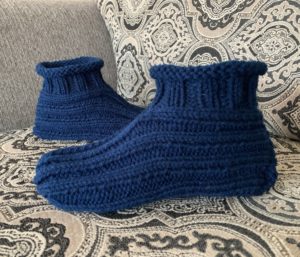
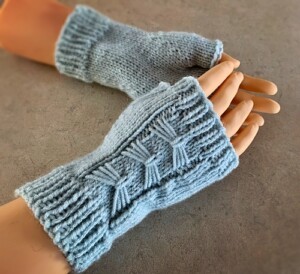





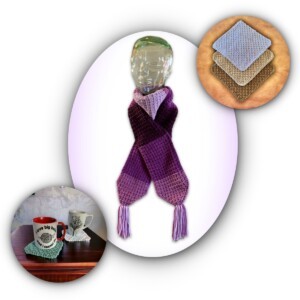
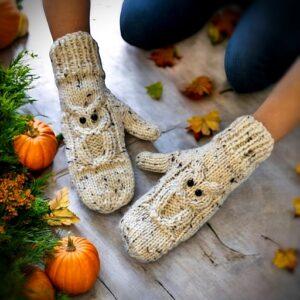
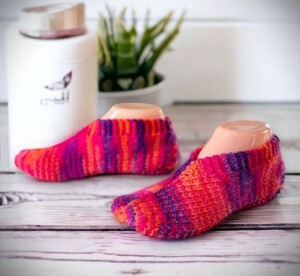




FREE Knitting Graph Paper for Colorwork Knitting









Row 9: K9 P1 K4 P4 K2 YO K1 YO K2 P4 K4
Row 10: P4 K4 P7 K4 P4 K1 P1 K8
Row 11: K9 P1 C4F P2 P2tog K3 YO K1 YO K3 P4 PM1 C4B
Row 12: P4 K5 P9 K3 P4 K1 P1 K8
Row 13: K9 P1 K4 P3 TWK2tog K5 K2tog P5 K4
Row 14: P4 K5 P7 K3 P4 K1 P1 K8
Row 15: K9 P1 C4F P1 P2tog TWK2tog K3 K2tog P5 PM1 C4B
Row 16: P4 K6 P5 K2 P4 K1 P1 K8
Row 17: K9 P1 K4 P2 TWK2tog K1 K2tog P6 K1 M1 K3
Row 18: P4 C1B K5 P3 K2 P4 K1 P1 K8
Row 19: K9 P1 C4F P2 Pick up the st as if to knit. K2tog PSSO. P4 C1B P1 C4B ♥ Repeat from ♥ to ♥ For as many times as required to achieve your desired length. End on any WRONG side row and cast off on the RIGHT side.
Please note: To end with a complete leaf and no stem (you don’t have to but it looks more finished) end the final repeat with a complete Row 16 and continue as follows.
Row 17: K9 P1 K4 P2 TWK2tog K1 K2tog P6 K4
Row 18: P4 K6 P3 K2 P4 K1 P1 K8
Row 19: K9 P1 C4F P2 Pick up the st as if to knit. K2tog PSSO. P6 C4B
Row 20: P4 K9 P4 K1 P1 K8
Cast off. Band done.
More of My Stuff On Etsy
Hat Top
With the RIGHT side of the hat facing you (the garter stitches at the top), pick up stitches along the edge. Pick up one stitch in the nub of each garter “ridge”, and for every group of 10 stitches picked up, pick up an extra stitch between the nubs.
If you need a little help with picking up the stitches, the video is cued up to the right spot in the video to help you out. It shows picking up 5 sts and then an extra st. For this pattern you need to pick up an extra st for every 10 garter rows or nubs.
Work your way down the length picking up a st in every 10 nubs, and picking up a st between the nubs. Knit whatever remaining sts remain after picking up between the ridge nubs (ie 9 or less sts). The number of sts picked up will vary depending on the size. The number isn’t overly important. It’s still just knitting and stretches, after all. More detail is in the Hints and Tips section further down the page.
♥ Next row: Knit across
Next row: Purl across ♥ Repeat from ♥ to ♥ for the length calculated below.
Use the table below to determine the length you need. The measurement includes the stockinette AND the garter sections.

♦ Next row: K2tog across. Knit any single remaining sts.
Next row: Purl across
Next row: Knit across
Next row: Purl across.♦ Repeat from ♦ to ♦ until you have 12 sts or less. End when you complete the K2tog row with the correct number of sts.
Break the yarn. Leave a length of yarn long enough to sew the seam. Draw through all remaining sts. Sew seam.
Hints and Tips
When in doubt about how long to make the brim, make it smaller. Knitting stretches and will accommodate. If you’re making it for a child and they’re going to grow, you may want to switch that up and use the larger option.
Think of picking up the sts as this math equation. For every 10 sts you need one extra st. So for as many groups of 10 “ridges” you have of garter st for the band, that’s how many extra sts you need to pick up evenly.
If you want to make the hat more floppy on the top, have at it. Make it longer than what is given in the hat top chart.
Abbreviations
K – Knit
P – Purl
P2tog – Purl 2 stitches together
K2tog – Knit 2 sts together.
sts – stitches
st – stitch
PSSO – Pass slipped stitch over
YO – Yarn over
C1B – Cable 1 back. Pick up next stitch on a cable needle. Pull this stitch to the BACK of your work. Knit the next stitch. Purl the stitch on the cable needle. Watch the video to learn how. It’s for a different pattern I wrote but the technique is exactly the same.
M1 – Make one (knit wise). Increase one stitch between the stitches. Pick up the yarn between the stitches. Twist it slightly and place it on your non-working needle. Knit the stitch.
PM1 – Make one (purl wise). Increase one stitch between the stitches. Pick up the yarn between the stitches. Twist it slightly and place it on your non-working needle. Purl the stitch.
TWK2tog – (Twist and Knit 2 sts together) – Pick up a stitch as if to knit. Twist the stitch and place it back on your non-working needle. Knit the 2 stitches together from right to left.
Side note: I use both versions of the terminology when it comes to cable stitches. I’ve been corrected that I’m using the wrong one for both occasions so it’s a no win for me. What I mean is that C4F is the same technique as C2F. Just like how C2B is the same as C4B. Do you think of it as the just the stitches you’re pulling or the number of stitches you’re using in total when you do it? It’s a personal choice, I guess.
C4F – Pick up the next 2 stitches with your cable needle. Pull the stitches to the FRONT of your work. Knit the next 2 stitches on your non-working needle. Knit the 2 stitches from the cable needle. Watch this video to see how.
C4B – Pick up the next 2 stitches with your cable needle. Pull the stitches to the BACK of your work. Knit the next 2 stitches on your non-working needle. Knit the 2 stitches from the cable needle. Watch this video to see how.
Like all of my patterns you have my permission to sell and/or give away the physical items that you make using this pattern. You are NOT permitted to reprint this pattern in any form unless you have obtained my written permission to do so.