Take a quick look to see my NEWEST knitting patterns! If you found it on one of my recent social media posts, it’ll be here for you to find.
Want to see all of my knitting patterns in one go? Click this link…
FREE Knitting Patterns
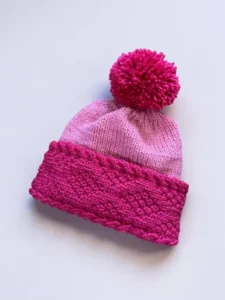

Diamond Brim Bobble Beanie Hat – FREE Knitting Pattern
Looking for a cozy knit hat with a little extra texture? The Diamond Brim Bobble Beanie is a warm, stylish knitting pattern for a beanie with a double-thick brim, a delicate diamond cable design, and an optional bobble on top. This knitted hat pattern uses simple knit and purl stitches to create the diamond detail, with decorative cables along the edges. Video tutorials are included to help you master the cable stitches, making this a great cable knitting pattern for confident beginners ready to learn a new skill. With sizes for children 5 years through adults, this bobble beanie is a lovely handmade hat for the whole family. Choose your favourite yarn, make the bobble or leave it off, and create a cozy knitted winter hat with beautiful texture and a snug, double-layered brim. Don’t forget to help a lady out and share this pattern if you like it. It’s one of the easiest ways you can support my work. If you prefer to print your patterns, you can download it from a number of places. In particular, my Shopify shop here – Diamond Brim Bobble Beanie. You can also get it at a number of other online book retailers such as Ravelry, LoveCrafts, and Etsy. There is also a Kindle and paperback version available to purchase on Amazon. Be sure to select your country United States, Canada, United Kingdom, Australia. If you are a paid supporter of mine over on Buy Me A Coffee, this pattern (and many more) are included with your monthly fee. You can see that here – Diamond Brim Bobble Beanie Hat. Looking for even more hats? I got you covered. Click the pic below to read the pattern right here on the website for FREE! Things You Need Worsted weight (AKA – 4 or medium) yarn – one standard ball (515 yards / 471 m) will be more than enough with yarn left over. 1 set of size 4 mm (US size 6) single pointed needles Cable needle Tapestry needle (to work in ends) Bobble or pom pom of your choice. You can make or purchase one. Gauge With size 4 mm (US size 6) needles or whatever size you need to obtain the correct number of stitches and rows. Be sure to check your gauge. It doesn’t need to be exact but the closer the better. In garter st 17 sts = 4 inches or 10 cm 34 rows = 4 inches or 10 cm Sizing Notes First things first: let’s figure out how big to make the hat. When you’re going by age and gender, the measurements are only approximate – especially for kids. Adult sizes are more standardized: small, medium, large, and extra large. If the person’s head is handy, measuring it directly is always best. That said, knitting isn’t an exact science. It stretches and contracts as needed, especially with the garter stitch inside the brim this hat uses. Child Sizing Data is based on World Health Organization and pediatric growth standards. You can also do an online search for sizing if you believe it to be inaccurate. Other organizations located in the USA, UK, etc give sizes as being slightly larger. A gentle reminder that this is knitting and it does stretch to accommodate close measurements. Close IS usually good enough in this case. This design is for children (5 ish) and older. The band around the brim is quite thick and a heads any smaller than 20 inches (51 cm) will be too wide to fit comfortably on the forehead. Adult Sizing Small/Medium – 21 to 22 inches (53.5 – 56 cm) Large/Extra Large – 23 to 24 inches (57 – 61 cm) Band Cast on 33 * Row 1: K10 P2 K4 P1 K1 P1 K1 P1 K3 P1 K1 P1 K1 P1 K4 Row 2: P4 K1 P1 K1 P1 K1 P3 K1 P1 K1 P1 K1 P4 K12 Row 3: K10 P2 C4F P2 K1 P1 K5 P1 K1 P2 C4B Row 4: P4 K2 P1 K1 P5 K1 P1 K2 P4 K12 Row 5: K10 P2 K4 P1 K1 P1 K3 P1 K3 P1 K1 P1 K4 Row 6: P4 K1 P1 K1 P3 K1 P3 K1 P1 K1 P4 K12 Row 7: K10 P2 C4F P2 K3 P1 K1 P1 K3 P2 C4B Row 8: P4 K2 P3 K1 P1 K1 P3 K2 P4 K12 Row 9: K10 P2 K4 P1 K3 P1 K1 P1 K1 P1 K3 P1 K4 Row 10: P4 K1 P3 K1 P1 K1 P1 K1 P3 K1 P4 K12 Row 11: K10 P2 C4F P1 K2 P1 K1 P1 K1 P1 K1 P1 K2 P1 C4B Row 12: P4 K1 P2 K1 P1 K1 P1 K1 P1 K1 P2 K1 P4 K12 Row 13: As row 9 Row 14: As row 10 Row 15: As row 7 Row 16: As row 8 Row 17: As row 5 Row 18: As row 6 Row 19: As row 3 Row 20: As row 4 * Repeat from * to * until the diamond pattern portion of the band measures the length you desire based on previous measuring information. End with any EVEN row of the pattern complete. Cast off. More of My Stuff On Etsy Hat Top With the RIGHT side of the hat facing you (the garter stitches at the top), pick up stitches along the edge. Pick up one stitch in the nub of each garter “ridge”, and for every group of five stitches picked up, pick up an extra stitch between the nubs. If you need a little help with picking up the stitches, the video is cued up to the right spot in the video to help you out by clicking this link How to Pick up stitches on the Easy Beanie or scanning the QR code below. Work your way down the length picking up a st in every 5 nubs, and picking up a st between the nubs. Knit whatever remaining sts remain after picking up between the ridge nubs (ie 4, 3, 2 or 1 st). The number of sts picked up will vary depending on the size. The number isn’t overly important. It’s still just knitting and stretches, after Read more
Read more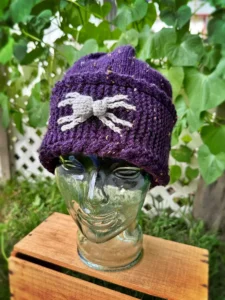
Knitted Spider Beanie – Knit Flat on 2 Needles – FREE Knitting Pattern
Do you need a spider beanie? No. Do you want a spider beanie? Heck, ya! There’s definitely a little Halloween spirit baked into this one, but why should Halloween have all the fun? If you’re a spider lover, a fan of creepy-crawly things, or just someone who likes a winter hat with a bit more personality, you can happily wear your spider all winter long. This spider winter hat is a fun winter hat with a big, bold spider that really stands out thanks to the simple colour work. It’s knit flat on straight needles, so there’s no knitting in the round, and while this isn’t a beginner knitting pattern, the colour work is easier than it looks. I’ve included helpful videos in the Abbreviations section for some of the trickier stitches too, so you can see exactly how they’re done instead of sitting there wondering what the heck is going on. Don’t forget to help a lady out and share this pattern if you like it. It’s one of the easiest ways you can support my work. If you prefer to print your patterns, you can download it from a number of places. In particular, my Shopify shop here – Knit a Spider Winter Beanie. You can also get it at a number of other online book retailers such as Ravelry, LoveCrafts, and Etsy. If you are a paid supporter of mine over on Buy Me A Coffee, this pattern (and many more) are included with your monthly fee. You can see that here – Spider Beanie Knitting Pattern – Knit Flat on 2 Needles – with How-to Video Links. One more thing before we move on to the pattern, there is a matching set of fingerless gloves you can make. There’s also a pumpkin hat if you’d prefer to make that 🎃 for Halloween. If you would like to make either, click the pic below to read the knitting pattern here on this website. Things You Need Worsted weight yarn in 2 colours: Main Colour (MC): approx. 175 g (one standard ball of big box store yarn will be enough). Spider Colour (SC): small amount. If the ball is the size of the bottom of soda or pop can, it will be more than enough. 1 set of 4 mm (US 6) single pointed knitting needles Cable Needle Tapestry needle – to sew the seam and work in the ends. Gauge If you’re off a bit, don’t worry the garter st in the band will help adjust to make it fit around the head. In garter st 17 sts = 4 inches or 10 cm 34 rows = 4 inches or 10 cm Sizing is written as such: (though there really isn’t much in this pattern) sm/med (lg/xlg) Band Cast on 27 with MC ♥ Row 1: K2 P2 K4 P1 K13 P1 K4 Row 2: P4 K15 P4 K4 Row 3: K2 P2 C4F P1 K13 P1 C4B Row 4: as row 2 (and all even rows not a part of the spider motif) ♥ Repeat from ♥ to ♥ 8 (9.5) inches. End with Row 2 Making the Spider Next row: K2 P2 C4F P1 K4 with SC K1 with MC K3 with SC K1 with MC K4 P1 C4B Next row: P4 K5 with SC P1 with MC K3 with SC P1 with MC K5 P4 K4 Next row: K2 P2 K4 P1 K2 with SC K1 with MC K1 with SC K1 with MC K3 with SC K1 with MC K1 with SC K1 with MC K2 P1 K4 Next row: P4 K3 with SC P1 with MC K1 with SC P1 with MC K3 in SC P1 with MC K1 With SC P1 with MC K3 P4 K4 Next row: K2 P2 C4F P1 K2 with SC K1 with MC K1 with SC K1 with MC K3 with SC K1 with MC K1 with SC K1 with MC K2 P1 C4B Next row: P4 K3 with SC P1 with MC K1 with SC P1 with MC K3 in SC P1 with MC K1 With SC P1 with MC K3 P4 K4 Next row: K2 P2 K4 P1 K2 ♦ With the cable needle, pick up and pull the st FORWARD. In MC K the st on the non-working needle. In SC K the st on the cable needle. ♦ Repeat from ♦ to ♦ once. In MC K1 ♪ With the cable needle, pick up the next st with the cable needle. Pull the st BACK. In SC K the st on the non-working needle, In MC K the st on the cable needle. ♪ Repeat from ♪ to ♪ once. K2 P1 K4. Next row: P4 K4 ■ with SC P1 with MC K1 ■ Repeat from ■ to ■ 3 times more. With MC K3 P4 K4. Next row: K2 P2 C4F P1 K3. With the cable needle, pick up and pull the st FORWARD. With MC K1 the st on the non-working needle. With SC K1 on the cable needle. With SC K1 With MC K1 with SC K1. With the cable needle, pick up and pull the st BACK. With SC K1 the st on the non-working needle. With MC K1 on the cable needle. K3 P1 C4B. Next row: P4 K5 with SC P2 with MC K1 with SC P2 with MC K5 P4 K4 Next row: K2 P2 K4 P1 K4. With SC TWK2tog. Bobble 6 (K6 into one stitch by alternating knitting into the front and back of the stitch, turn. Working the following rows into the 6 stitches in the one stitch, P6, turn, K6, turn, P6, turn, K6, turn, P6, turn, K6, turn, P6, turn, TWK2tog. K2tog twice (do NOT turn). Pass the middle stitch over the stitch closest to the tip of the needle. Two bobble stitches remain. Pass the second bobble stitch over the stitch closest to the tip of the needle. (The bobble is now 1 stitch again on your needle.) K2tog. With MC K4 P1 K4. Next row: P4 K5 with SC P3 with MC K5 P4 K4 Next row: K2 P2 C4F P1 K4. With SC INC. Bobble 5 (K5 into one stitch by alternating knitting into the front and back of the stitch, Read more
Read more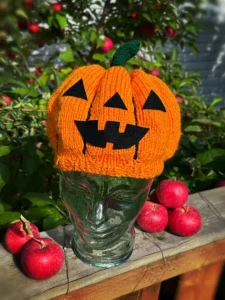
Halloween Pumpkin Hat: Free Knitting Pattern for Kids & Adults
Halloween is the perfect excuse to knit something a little silly, and this pumpkin hat is definitely ready for the occasion! It’s a fun and fairly easy knitting project that comes in both kids’ and adult sizes, making it a great choice for anyone who wants to add a handmade touch to their Halloween costume or outfit. The hat is knitted flat on straight needles with simple shaping to create the round pumpkin shape. A knitted stem finishes off the top, and chain stitches are added to separate the sections and give the pumpkin that fun, cartoon-like look. If you’re looking for an easy Halloween hat to knit, this one is a quick and enjoyable project. I’ve also included step-by-step photos showing how to add the chain stitches, so you can easily get the finished look. Grab your orange yarn and let’s knit a pumpkin! Not a knitter but know how to crochet? I wrote that pattern out years ago. You can see that one here: Crocheted Pumpkin Beanie Hat – FREE Jack o’ Lantern Crochet Pattern or you can tap the photo If you would prefer the printable version of the pattern, I have a number of online retailers you can buy it from including online at KweenBee on Shopify, Etsy, Ravelry and Buy Me A Coffee (👈🏼 If you are a member you can print this for free with your monthly fee 😉) I also have the paperback booklet and Kindle versions available on Amazon. You can find it here – United States, Canada, United Kingdom, and Australia. Don’t forget to share this pattern with anyone you think may like it on your social media accounts. It’s free for everyone to use and it’s a great way to support my work without paying a single cent. I even included the handy share button right here 👇🏼 Things You Need Orange Worsted weight yarn. I used Loops and Threads because I liked this shade of orange, but any orange colour will do. Green Worsted weight yarn. A small amount Black worsted weight yarn (optional) – to highlight the sections and give a more cartoon-like feel. 5 mm (US size 8) knitting needles Tapestry needle – to sew seams and line between sections. Gauge In stockinette 18 sts = 4 inches or 10 cm 23 rows = 4 inches or 10 cm The pattern is written for sizes as such child (sm/med, lg/ xlg) Child size ~ 18 inches around Small/Medium ~ 21 inches around Large/X-large ~ 24 inches around The ribbing at the brim helps the hat stretch and contract to fit. The Pumpkin Cast on 56 (66, 74) sts ♥ Row 1: *K2 P2* Repeat from * to * to the last 2 sts. K2. The child size (smallest size with 56 sts), won’t have 2 sts. Row 2: P0 (2, 2) *K2 P2* Repeat from * to * to the last 2 sts. P2 for the child size (smallest size with 56 sts). ♥ Repeat from ♥ to ♥ one more time for a total of 4 rows. Row 5: P1 ♦ P1 K5 (6, 7) ♦ Repeat from ♦ to ♦ until 1 (2, 1) st remains. P1 (2, 1). Row 6: K1 (2, 1) ♣ P5 (6, 7) K1 ♣ Repeat from ♣ to ♣ to the last st. K1 Row 7: P1 ♪ P1 M1 K5 (6, 7) M1 ♪ Repeat from ♪ to ♪ until 1 (2, 1) st remains. P1 (2, 1). Row 8: K1 (2, 1) ● P7 (8, 9) K1 ● Repeat from ● to ● to the last st. K1 Row 9: P1 ◘ P1 M1 K7 (8, 9) M1 ◘ Repeat from ◘ to ◘ until 1 (2, 1) st remains. P1 (2, 1). Row 10: K1 (2, 1) ▲ P9 (10, 11) K1 ▲ Repeat from ▲ to ▲ to the last st. K1. ☺ Row 11: P1 ◊ P1 K9 (10, 11) ◊ Repeat from ◊ to ◊ until 1 (2, 1) st remains. P1 (2, 1). Row 12: K1 (2, 1) ▲ P9 (10, 11) K1 ▲ Repeat from ▲ to ▲ to the last st. K1. ☺ Repeat from ☺ to ☺ until your work measures 6 (7, 8) inches or 5 (18, 20) cm from the cast on edge. Next row: P1 □ P1 TWK2tog K5 (6, 7) K2tog □ Repeat from □ to □ until 1 (2, 1) st remains. P1 (2, 1). Next row: K1 (2, 1) ● P7 (8, 9) K1 ● Repeat from ● to ● to the last st. K1 Next row: P1 ☼ P1 TWK2tog K3 (4, 5) K2tog ☼ Repeat from ☼ to ☼ until 1 (2, 1) st remains. P1 (2, 1). Next row: K1 (2, 1) ♣ P5 (6, 7) K1 ♣ Repeat from ♣ to ♣ to the last st. K1 Next row: P1 ♫ P1 TWK2tog K1 (2, 3) K2tog ♫ Repeat from ♫ to ♫ until 1 (2, 1) st remains. P1 (2, 1). Next row: K1 (2, 1) ◄ P3 (4, 5) K1 ◄ Repeat from ◄ to ◄ to the last st. K1. If making the child size, skip to the row marked with 🎃 **For Sm/Med and Lg/Xlg ONLY!** Next row : P1 ♫ P1 TWK2tog K0 (0, 1) K2tog ♫ Repeat from ♫ to ♫ until 1 (2, 1) st remains. P1 (2, 1). Next row: K0 (2, 1) ⌂ P0 (2, 3) K1 ⌂ Repeat from ⌂ to ⌂ to the last st. K1. If making the Lg/Xlg sizes, skip to the row marked with 🎃 **For Sm/Med ONLY!** Next row: P1 ∆ P1 TWK2tog ∆ Repeat from ∆ to ∆ until 2 sts remains. P2 Next row: K1 ⌂ K1 P1 ⌂ Repeat from ⌂ to ⌂ to the last 2 sts. K2. Break orange yarn. Go to the Stem. **For Child and Lg/Xlg ONLY!** 🎃 Next row: P1. * P1. Insert your needles as if to knit. Pass onto your working needle. K2tog. Pass the st you passed over, over the the K2tog you just made. * Repeat from * to * until 1 (0, 1) st remains. P1 (0, 1). Next row: K1 ▼ P1 K1 ▼ Repeat from ▼ to ▼to the last st. K1. Break orange yarn. Go to the Stem. More of My Stuff On Etsy Stem Next row: With GREEN, K2tog across. Knit any remaining st. Next Read more
Read more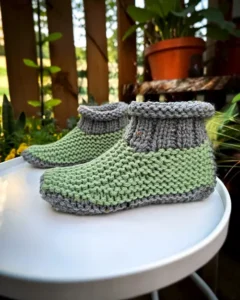
Super Thick Knit Flat Sideways Slippers – Free Knitting Pattern
These chunky sideways slippers are warm, soft, sturdy, and made to handle plenty of everyday wear. The slippers are knit double thick, giving them a substantial feel that keeps your feet cozy and comfortable on cold floors. They can be knit with two strands of worsted weight yarn held together or with one strand of super bulky yarn, making them a great way to use up yarn you already have. Knit flat on straight needles, this easy slipper knitting pattern features a comfortable cuff that helps keep the slippers snug around your feet and ankles. The sideways construction gives these chunky knit slippers their unique shape while keeping the knitting simple and enjoyable. They are quick to knit and make a practical handmade gift for yourself, family, or friends. Helpful photos are included throughout the pattern to provide extra guidance in sections that may need a little more explanation. These warm slipper patterns are a satisfying project for a confident beginner and a relaxing, quick knit for more experienced knitters. If you’re looking for a cozy pair of super bulky slippers to knit, these extra-thick slippers are designed to be warm, durable, and wonderfully comfortable. If you would prefer the printable version of the pattern, I have a number of online retailers you can buy it from including online at KweenBee on Shopify, Etsy, Ravelry and Buy Me A Coffee (👈🏼 If you are a member you can print this for free with your monthly fee 😉) I also have the paperback booklet and Kindle versions available on Amazon. You can find it here – United States, Canada, United Kingdom, and Australia. If you are not a fan of thick and bulky slippers, this pattern is a version of my original sideways slippers. You can click on the photo or the button to read it on this website. Sideways Slippers Don’t forget to share this pattern with anyone you think may like it on your social media accounts. The pattern is free for everyone to use and it’s a great way to support my work without paying a single cent. I even included the handy share button right here 👇 Things You Will Need Super Bulky weight yarn in 2 coordinated colours or Worsted weight yarn in 2 coordinated colours. 2 balls of each colour. Standard balls of yarn (354 yards or 324 m ) bought at a big box store will do. You will have yarn leftover when done. Set of 5 mm (8 US) single pointed needles Tapestry needle to sew the seams and work in ends Gauge In garter stitch. The garter stitch used makes it very stretchy making this a VERY forgiving pattern if your gauge is off slightly. Size 5 mm (US size 6) single pointed needles 8 stitches every 2 inches (5 cm) 14 rows every 2 inches (5 cm) Sizes are written as such: Men’s 5-6 (7-8, 9-10, 11-12) Women’s 6-7 (8-9, 10-11, 12) Colour Notations MC – Main colour SC – Sole colour If you are making the slippers a single colour, ignore the colour changes noted in the pattern. LEFT foot With SC cast on 28 (30, 32, 34) Row 1-2: With SC K across Row 3 – 5: With MC K across Row 6: K20 (22, 24, 26) WSR. Turn. Row 7: K20 (22, 24, 26) Row 8: K17 (19, 21, 23) WSR. Turn. Row 9: K17 (19, 21, 23) Row 10: K14 (16, 18, 20) WSR. Turn. Row 11: K14 (16, 18, 20) Row 12: K11 (13, 15, 17) WSR. Turn. Row 13: K11 (13, 15, 17) Row 14: K9 (10, 11, 12) WSR. Turn. Row 15: K9 (10, 11, 12) Next row: K0 (0, 10, 11) WSR. Turn. Next row: K0 (0, 10, 11) Next row: K28 (30, 32, 34). Repeat this row 1 (3, 3, 5) times more for a total of 2 (4, 4, 6) rows. Next row: Cast off 11 (12, 13, 14). K to the end of the row. 17 (18, 19, 20) sts Next row: K17 (18, 19, 20) Repeat this row 2 (4, 6, 8) times more for a total of 3 (5, 7, 9) rows. Next row: K13 (15, 16, 18) WSR. Turn. Next row: K13 (15, 16, 18) Next row: K10 (12, 13, 15) WSR. Turn. Next row: K10 (12, 13, 15) Next row: K7 (9, 10, 12) WSR. Turn. Next row: K7 (9, 10, 12). Cast on 11 (12, 13, 14) sts. Next row: K28 (30, 32, 34). Repeat this row 3 (5, 5, 7) times more for a total of 4 (6, 6, 8) rows. Next row: K0 (0, 10, 11) WSR. Turn. Next row: K0 (0, 10, 11) Next row: K9 (10, 11, 12) WSR. Turn. Next row: K9 (10, 11, 12) Next row: K26 (28, 30, 32) WSR. Turn. Next row: K26 (28, 30, 32) Next row: K23 (25, 27, 29) WSR. Turn. Next row: K23 (25, 27, 29) Next row: K20 (22, 24, 26) WSR. Turn. Next row: K20 (22, 24, 26) Next row: K17 (19, 21, 23) WSR. Turn. Next row: K17 (19, 21, 23) Next row: K28 (30, 32, 34) Next 2 rows: With SC K across. Cast off. Making the Cuff With SC and the RIGHT side of your work facing you, pick up 13 (14, 15, 16) sts along the edge, 6 (7, 8, 9) sts on the top of the foot and 13 (14, 15, 16) sts along the other edge. (32, 35, 38, 41 sts) Pick up along these edges Sts picked up along cast on edge Sts pick up on top of foot All cuff sts picked up ☼ Next row: *P2 K1* Repeat from * to * to the last 2 sts. P2 Next row: ♥ K2 P1 ♥ Repeat from ♥ to ♥ to the last 2 sts. K2 ☼ Repeat from ☼ to ☼ 6 (6, 8, 8) more times for a total of 8 (8, 10, 10) rows Next row: P across ☺ Next row: K across Next row: P across ☺ Repeat from ☺ to ☺ 4 more times for a total of 6 rows. Cast off loosely. Form Toe and Make Sole With the RIGHT side of your work facing you, pick up 7 (10, 11, 14) at the toe in the MC section. If making the slipper in one colour, centre the stitches at the toe end. Next row: K across Next row: Pick up the first st in the cast on edge as shown. K2tog 0 (2, 2, 2) times. K1 (0, 1, 4) K2tog 3 times. Pick up the first st in the cast off st. Next row: K across * Next row: Pick up the next st in the cast on edge. K all sts. Pick up the next st in the cast off edge. Next row: K across * Repeat from * to * until you have 10 (11, 12, 13) sts ♠ Next row: With the RIGHT side facing you, pick up the next st in the cast on edge. K2tog. K to last 2 sts K2tog. Pick up the next st in the cast off edge. Next row: K across ♠ Repeat from ♠ to ♠ down the length of the Read more
Read more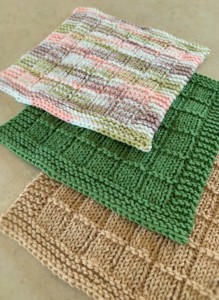
Bars and Stripes Knitted Dishcloth Pattern – Learn How to Knit
I only use hand knit dishcloths and have for years. I can’t express the superiority of these things! Regardless of the style, and I have designed a few, they last forever, have fabulous scrubbing power and double as a great heat protector when setting a hot pan on the counter or grabbing something out of the oven. They wash well and it’s nice to have something on hand that reminds you of how truly crafty you are ? Not only are these great to have around, but this is another great project for anyone learning how to knit. This knitting pattern uses very basic stitches and I’ve made a complete how-to video showing every single step! Learn to cast on, knit, purl, cast off and work in the ends when you are finished. All you need to do is press the ▶️ button to start watching. https://youtu.be/tVV3jwyhplg If you’re learning how to knit, this is a great project to learn on. Even if it doesn’t turn out perfectly, you still have a useable item. And if you do know how to knit already, it’s a great way to use up the left overs from your stash. And who couldn’t use an extra dishcloth or two anyways. This pattern is now available for download for a small fee/donations. You can download the ad free, printable version from a number of online retailers. You can download it from my Shopify shop – Bars and Stripes Knitted Dishcloth, my Etsy shop, and Ravelry. If you support my work on Buy Me A Coffee, you can download the pattern as a part of your monthly contribution. If you are loving this and all the other free knitting patterns on this site, please consider checking out Help Support My Work page. If you can’t afford to help out financially, which I’m totally cool with btw, please consider sharing this pattern with everyone you think may be interested. I’ve included these handy dandy share buttons below. You can help promote this site with a few simple clicks! Things you will need Size 8 (5 mm) straight knitting needles Darning needle to sew in the ends 100% Cotton Worsted weight yarn The Pattern The repeat signs are different in this pattern than what is mentioned in the video. If you haven’t watched the video, then you can ignore the unicorn and teddy bear comments written below. FYI – this image ♠︎ replaces in the video This image ♦︎ replaces in the video Cast on 39 sts. Row 1 – 6: Knit across ♠︎ ♦︎ Row 7: K4 P1 *(K4 P1)* Repeat from * to * 5 times more. K4 Row 8: K5 *(P4 K1)* Repeat from * to * 5 times more. K4 ♦︎ Repeat from ♦︎ to ♦︎ 2 more times. Next row: Repeat row 7 Next row: Knit across ♠︎ Repeat from ♠︎ to ♠︎ 5 more times. Knit across the next 4 rows. Cast off. My stuff on Etsy Hints and Tips I’ve made the pattern so it is a square as I could get it. If you feel it’s too long (or short) add or take away ♠︎ to ♠︎ repeats. It’s a washcloth, not rocket science. The final piece can be however you like it. I know some people (Me. I’m some people) like things to have the same motif on both sides. This isn’t one of those things. The backside isn’t terrible, just different from the front. It’s either going to offend you to the core of your being or you won’t give a fµ€k. It’s your call. If you hold the cast on end to the back of your work and catch the yarn every other stitch, you’ll have one less end to sew in. I’ve made a quick photo tutorial showing you how to do it. You can see it here – How to Work in Ends While Knitting. I hate sewing in ends and this is a great technique to learn. https://youtu.be/1_zF6HAzsfY If you have any questions or comments you can send me an email through my contact page. The comment section at the bottom of this pattern is also great to post your questions. I answer them ASAP. This pattern grants you the pleasure and profit of selling or giving away anything that you make. It does NOT give you permission to publish, print or distribute it in any format. You are NOT permitted to claim this pattern as your own. Please respect mine, and other author’s rights. You’re a huge jerky jerk if you do this and I’m certain puppy dogs don’t like you because you’re such a horrible person. How can you live with yourself???
Read more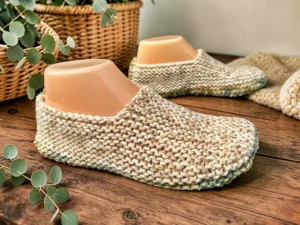
Free Knit Flat Slippers Pattern for All Skill Levels
Welcome to this free adult slippers knitting pattern! These cozy slippers are knit flat using straight needles and a unique sideways construction with simple short rows to create a comfortable, well-fitting slipper. While the construction is a little different from traditional slipper patterns, the knitting itself is easy to follow, making this a great project for confident beginners and experienced knitters alike. If you’re looking for an easy slipper knitting pattern that creates warm, comfortable slippers, you’ve come to the right place. This free knitting pattern uses only basic knit stitches and knit two together (K2tog), with plenty of step-by-step photos to guide you through the process. The detailed instructions make it easy to understand the sideways construction, even if you’ve never worked short rows before. Whether you’re knitting a cozy pair for yourself, making handmade gifts, or adding another pair of knitted slippers to your collection, this quick and satisfying project is sure to become a favourite. If you would prefer the printable version of the pattern, I have a number of online retailers you can buy it from including online at KweenBee on Shopify, Etsy, Ravelry and Buy Me A Coffee (👈🏼 If you are a member you can print this for free with your monthly fee 😉) I also have the paperback booklet and Kindle versions available on Amazon. You can find it here – United States, Canada, United Kingdom, and Australia. Don’t forget to share this pattern with anyone you think may like it on your social media accounts. It’s free for everyone to use and it’s a great way to support my work without paying a single cent. I even included the handy share button right here 👇🏼 Things You Will Need Worsted weight yarn in 2 coordinated colours. Any standard ball of yarn (354 yards or 324 m ) bought at a big box store will do. You will have a lot leftover when done. Set of 4 mm (6 US) single pointed needles Tapestry needle to sew the seams and work in ends Gauge In garter stitch. The garter stitch used makes it very stretchy making this a VERY forgiving pattern if your gauge is off slightly. size 4 mm (US size 6) single pointed needles 9 stitches every 2 inches (5 cm) 18 rows every 2 inches (5 cm) Sizes are written as such: Men’s 5-6 (7-8, 9-10, 11-12) Women’s 6-7 (8-9, 10-11, 12) Colour Notations MC – Main colour SC – Sole colour LEFT foot With SC cast on 32 (34, 36, 38) Row 1-2: With SC K across Row 3 – 5: With MC K across Row 6: K23 (25, 27, 29) WSR. Turn. Row 7: K23 (25, 27, 29) Row 8: K20 (22, 24, 26) WSR. Turn. Row 9: K20 (22, 24, 26) Row 10: K17 (19, 21, 23) WSR. Turn. Row 11: K17 (19, 21, 23) Next row: K14 (16, 18, 20) WSR. Turn. Next row: K14 (16, 18, 20) Next row: K11 (12, 13, 14) WSR. Turn. Next row: K11 (12, 13, 14) Next row: K0 (0, 12, 13) WSR. Turn. Next row: K0 (0, 12, 13) Next row: K32 (34, 36, 38). Repeat this row 1 (3, 3, 5) times more for a total of 2 (4, 4, 6) rows. Next row: Cast off 13 (14, 14, 15) K to the end of the row. 19 (20, 22, 23) sts Next row: K19 (20, 22, 23) Repeat this row 4 (6, 8, 10) times more for a total of 5 (7, 9, 11) rows. Next row: K16 (17, 19, 20) WSR. Turn. Next row: K16 (17, 19, 20) Next row: K13 (14, 16, 17) WSR. Turn. Next row: K13 (14, 16, 17) Next row: K10 (11, 13, 14) WSR. Turn. Next row: K10 (11, 13, 14) Next row: K7 (8, 10, 11) WSR. Turn. Next row: K7 (8, 10, 11). Cast on 13 (14, 14, 15) sts. Next row: K32 (34, 36, 38). Repeat this row 3 (5, 5, 7) times more for a total of 4 (6, 6, 8) rows. Next row: K0 (0, 12, 13) WSR. Turn. Next row: K0 (0, 12, 13) Next row: K11 (12, 13, 14) WSR. Turn. Next row: K11 (12, 13, 14) Next row: K29 (31, 33, 35) WSR. Turn. Next row: K29 (31, 33, 35) Next row: K26 (28, 30, 32) WSR. Turn. Next row: K26 (28, 30, 32) Next row: K23 (25, 27, 29) WSR. Turn. Next row: K23 (25, 27, 29) Next row: K20 (22, 24, 26) WSR. Turn. Next row: K20 (22, 24, 26) Next row: K across Next 2 rows: With SC K across. Cast off RIGHT side. Form Toe and Make Sole With the RIGHT side of your work facing you, pick up 8 (11, 12, 15) at the toe in the MC section. Next row: K across Next row: Pick up the first st in the cast on edge as shown. K2tog 1 (2, 2, 2) times. K0 (1, 2, 5) K2tog 3 times. Pick up the first st in the cast off edge. Next row: K across * Next row: Pick up the next st in the cast on edge. K all sts. Pick up the next st in the cast off edge. Next row: K across * Repeat from * to * until you have 12 (14, 15, 16) sts ♠ Next row: With the RIGHT side facing you, pick up the next st in the cast on edge. K2tog. K to last 2 sts K2tog. Pick up the next st in the cast off edge. Next row: K across ♠ Repeat from ♠ to ♠ down the length of the sole. Heel Next row: Pick up a st in the next ridge. K2tog. K8 (10, 5, 12) K2tog 0 (0, 1, 0). K0 (0, 4, 0). K2tog. Pick up st in the next ridge. Next row: K across. For sizes women’s 6-7 and 8-9 and men’s 5-6 and 7-8, skip to the row marked with ♪ ** For sizes women’s 10-11 and 12 and men’s 9-10 and 11-12 ONLY! Knit the next 2 rows as instructed. ** ♦ Next row: Pick up a st in the edge. K2tog. K to last 2 sts K2tog. Pick up st in the edge. Next row: K across ♦ Repeat from ♦ to ♦ (0, 0, 1, 2) more times. ♪ Next row: Pick up a st in the edge. K2tog twice. K to last 4 sts K2tog twice. Pick up st in the edge. Next row: K across. ♪ Repeat from ♪ to ♪ until 6 sts remain. Next row: Pick up a st in the edge. K2tog 3 times. Pick up st in the edge. Next row: K across. ♣ Next row: Pick up a st in the edge. K2tog. K1. K2tog. Pick up st in the edge. Next row: K across. ♣ Repeat from ♣ to ♣ until at the top to the slipper Last row: Pick up a st in the edge. K2tog. Cast off. K1. Cast off. K2tog. Cast off. Pick up st in the edge. Cast off. Break yarn. Draw through last loop. More of My Stuff On Etsy RIGHT Foot With SC cast on 32 (34, 36, 38) Row 1-2: With SC Read more
Read more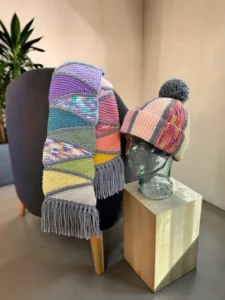
Free Scrap Yarn Hat & Scarf Knitting Pattern Set
Looking for free scrap yarn knitting patterns? This matching scarf and beanie set is the perfect way to turn leftover yarn into a cozy handmade winter accessory you’ll love to wear or give as a gift. Both patterns are knit flat on straight needles, making them a great choice for knitters who prefer working without circular needles. Whether you’re trying to use up your yarn stash, create one-of-a-kind colour combinations, or simply enjoy relaxing knitting projects, these free knitting patterns make every skein count. The matching scarf and beanie were designed to work beautifully together while letting your creativity shine. No two projects will ever be exactly alike, making this set ideal for stash busting, charity knitting, handmade gifts, and craft fair inventory. Knit the scarf, the beanie, or both to create a colourful winter hat and scarf set that’s warm, practical, and uniquely yours. If you prefer an ad-free experience, a printable PDF of the complete matching set is also available. Tap the button or photo below to read the pattern in full on this website! Diagonal Mosaic Scrap Scarf A relaxing knit that creates a bold geometric design while helping you use up small amounts of leftover yarn. Click Me! Mosaic Scrap Beanie A warm knit-flat beanie that coordinates perfectly with the scarf and is ideal for using even more scraps from your yarn stash. Click Me! Together they create a cozy matching winter set that’s perfect for everyday wear, handmade gifts, charity knitting, and selling finished items at craft fairs. If you prefer to knit without advertisements or want both patterns together in one convenient download, a printable PDF version of the complete matching set is also available. You can buy it online at KweenBee on Shopify, Etsy and Buy Me A Coffee. I also have the paperback booklet and Kindle versions available on Amazon. You can find it here – United States, Canada, United Kingdom, and Australia. Don’t forget to share this pattern set with anyone you think may like it on your social media accounts. They are free for everyone to use and sharing is a great way to support my work without paying a single cent. I even included the handy share button right here 👇🏼
Read more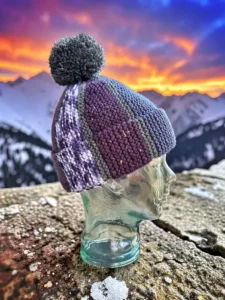
Mosaic Scrap Yarn Beanie Knitting Pattern – Free Knit Flat Pattern
Turn your leftover yarn into a beautiful winter hat with this Diagonal Mosaic Scrap Yarn Knitting Pattern. Designed for knitters who love making the most of every skein, these coordinating scrap yarn knitting patterns create eye-catching diagonal mosaic designs that are as fun to knit as they are to wear. With endless colour possibilities, no two sets will ever be exactly alike, making every project a unique reflection of your yarn stash. Perfect for stash busting, charity knitting, thoughtful handmade gifts, and craft fair bestsellers, this pattern helps you transform leftover yarn into a stylish, practical accessory. Whether you plan your colours or enjoy the surprise of knitting with scraps, you’ll create a cozy hat that’s truly one of a kind. And if you’re in the mood, this is a part of a set! You can also make the matching scarf 😊 It’s free to read on this website. Tap the photo or button to start reading it now. Diagonal Mosaic Scarf – Scrap Yarn Knitting Pattern Click here to read Will there be ends to sew in? Not if you catch the ends as you knit! I have a video that shows you how to do it when making knit stitches. That video is here: https://youtu.be/1_zF6HAzsfY If you would prefer the printable version of the pattern (it also includes the matching scarf pattern), I have a number of online retailers you can buy it from including online at KweenBee on Shopify, Etsy and Buy Me A Coffee. I also have the paperback booklet and Kindle versions available on Amazon. You can find it here – United States, Canada, United Kingdom, and Australia. Don’t forget to share this pattern with anyone you think may like it on your social media accounts. It’s free for everyone to use and it’s a great way to support my work without paying a single cent. I even included the handy share button right here 👇🏼 Things You Will Need Set of 4 mm (6 US) single pointed needles Tapestry needle to sew the seams and work in ends Worsted weight yarn scraps or 2 coordinated colours. Any standard ball of yarn bought at a big box store will be enough. The amount of scrap yarn you’ll need for each section is about the size of a bottom of a pop or soda can. There will be a bit leftover. Pom pom varies on how big you make yours. Gauge In garter stitch. Gauge is not overly important. The garter stitch used makes it very stretchy. 9 stitches every 2 inches (5 cm) 16 rows every 2 inches (5 cm) Colour Notations I had to use something to delineate between colour changes. You will have more colours than what I list here if using scrap yarn. The hat needs 9 (8 scrap, 1 highlight) colours OC – other colour (scrap yarn colours or main colour) HC – highlight colour (colour between sections) Sizing One size fits most ADULTS. For more scrap hat knitting patterns in both children’s and adult sizes, visit KweenBee.com/Scrap. Please note, this is a VERY forgiving pattern with a LOT of stretch. This beanie is made in sections that are knit from the crown of the head down toward the forehead, not in rows going around the head like a traditional beanie. You’ll also need to decide if you prefer a rounded or pointy top to your hat. Choose ONE section of rows 21 to 24 to repeat for the entire hat. Cast on 47 with HC Row 1: With HC K35 P12 Row 2: P11 K36 ♥ Row 3: With HC K1. With OC K34 P12 Row 4: P11. K35. Turn. Leave remaining 1 st unworked. Row 5: With HC K2. With OC K32 P12 Row 6: P11. K33. Turn. Leave remaining 3 sts unworked. Row 7: With HC K2. With OC K30 P12 Row 8: P11. K31. Turn. Leave remaining 5 sts unworked. Row 9: With HC K2. With OC K28 P12 Row 10: P11. K29. Turn. Leave remaining 7 sts unworked. Row 11: With HC K2. With OC K26 P12 Row 12: P11. K27. Turn. Leave remaining 9 sts unworked. Row 13: With HC K2. With OC K24 P12 Row 14: P11. K25. Turn. Leave remaining 11 sts unworked. Row 15: With HC K2. With OC K22 P12 Row 16: P11. K23. Turn. Leave remaining 13 sts unworked. Row 17: With HC K2. With OC K20 P12 Row 18: P11. K21. Turn. Leave remaining 15 sts unworked. Row 19: With HC K2. With OC K18 P12 Row 20: P11. K19. Turn. Leave remaining 17 sts unworked. If changing to a new colour, break OC now. If making the hat 2 colours do NOT break. If Making A POINTY Top Pointy version Rows worked evenly create more rows Row 21: With HC K18 P12 When knitting this row, and if using scrap yarn, catch the end behind your work. Using the video in the intro Row 22: P11. K to the end of the row. Row 23: K35 P12. When knitting this row, and if using the same colour for OC, catch the yarn behind your work to carry it to the start of the row. Row 24: P11. K to the end of the row. ♥ Repeat from ♥ to ♥ 7 times more for a total of 8 sections. End with Row 22. Cast off with the RIGHT side facing you. Cut a longer length of yarn to sew seam and draw top together. If Making A ROUNDED Top Rounded version Short rows make less rows meeting at the top Row 21: With HC K18 P12 When knitting this row, and if using scrap yarn, catch the end behind your work. Using the video in the intro. Row 22 (wrong side): P11. K 27. Make a wrapped short row as follows: Pull the yarn to the front of your work. Pass the next st on the non-working needle to your working needle. Wrap your yarn around the st and pull the yarn to the back of your work. Pass the wrapped st back on to your non-working needle. Leave this st and 8 remaining sts unworked. Turn. RIGHT side of your work Knit the next st as you normally would. St complete. Continue to work row 23. (The st just made is a part of the 26 sts.) Row 23: K26 P12. When knitting this row, and if using the same colour for OC, catch the yarn behind your work to carry it to the start of the row. Row 24: P11. K to the end of the row. ♥ Repeat from ♥ to ♥ 7 times more for a total of 8 sections. Read more
Read more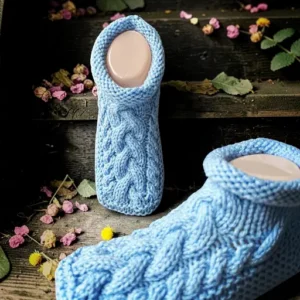
Cozy Cable Slippers – FREE Knitting Pattern for Comfy Feet
If you love cozy handmade slippers and are ready to take on a knitting project with a little more detail, this cable slipper knitting pattern is a beautiful challenge. These adult knitted slippers feature a classic cable design that adds texture, warmth, and a handmade touch. This pattern is not designed for beginners, but if you are comfortable following a pattern and want to build your skills, it’s a rewarding project to try. To help you along the way, I’ve included step-by-step photos and video tutorials for the trickier sections of the pattern. You’ll have extra guidance as you work through the cable details and shape these cozy slippers. Grab your favorite yarn, settle in, and enjoy creating a pair of warm, comfortable knitted slippers that you’ll love wearing or gifting. You can download it from a number of places. In particular, my Shopify site here – Cozy Cable Slippers. You can also get it at a number of other online book retailers such as Ravelry, and Etsy. I also have versions available on Amazon as a paperback and for Kindle. Click the area you are in if you’d like to get the paperback – United States, United Kingdom, Canada, Australia. ☺️ Don’t forget, it’s on Buy Me A Coffee, too! If you enjoy this pattern and my other free online knitting patterns, please consider making a small donation or helping me out by visiting my Help Support My Work page. If that’s not possible, that’s totally fine too! Even sharing this page on your social media helps me out immensely. You can use the buttons below to do so easily. Things you need Worsted weight yarn 2 sets of size 4 mm (US size 6) single pointed needles Cable needle Stitch holder Tapestry needle ( to work in ends) Gauge With size 4 mm (US size 6) needles or whatever size you need to obtain the correct number of stitches and rows. Be sure to check your gauge otherwise the sizing won’t be correct. In garter st 17 sts = 4 inches or 10 cm 34 rows = 4 inches or 10 cm Sizes (are written as such) Women’s 6-7 (8-9, 10-11, 12-13) Men’s 5-6 (7-8, 9-10, 11-12) Top of Toe Cast on 21 Row 1: P1 K4 P1 K9 P1 K4 P1 Row 2 (and all even rows for the toe): K1 P4 K1 P9 K1 P4 K1 * Row 3: P1 C4F P1 C6F K3 P1 C4B P1 Row 5: as row 1 Row 7: P1 C4F P1 K3 C6B P1 C4B P1 Row 9: as row 1 Row 10: as row 2 * Repeat from * to * 2 (2, 2, 3) times more Next row: repeat row 3 Side Cables With the wrong side facing you Next row: K1 P4 K1. Transfer the remaining 15 sts onto a stitch holder (You can also leave the sts on your needle and leave the sts unworked for this and any other st transfers). Turn. Next row: Working on the the 6 sts remaining on your needle, P1 K4 P1 Next row: K1 P4 K1 You can place a st marker hereto know how many repeats you’ve done ♦ Next row: P1 C4B P1 Next row: K1 P4 K1 Next row: P1 K4 P1 Next row: K1 P4 K1 ♦ Repeat from ♦ to ♦ 4 (5, 6, 6) times more. Next row: P1 C4B P1 Next row: K1 P4 K1. Sts not cast off yet. Cast off these 6 sts. Break yarn. Transfer the sts from the st holder back onto your needle. Next row: With the WRONG side facing you, P9 K1 P4 K1 Next row: P1 K4 P1. Transfer the next 9 sts back on to your st holder. Turn. Next row: Working on the the 6 sts remaining on your needle, K1 P4 K1 ♥ Next row: P1 C4F P1 Next row: K1 P4 K1. Next row: P1 K4 P1 Next row: K1 P4 K1 ♥ Repeat from ♥ to ♥ 4 (5, 6, 6) times more. Next row: P1 C4F P1 Next row: K1 P4 K1. Sts not cast off yet. You’ll end with a single st at the arrow. Cast off these 6 sts. Do NOT Break yarn. Leave the single st on the needle and pick up sts along the first edge as instructed. Top Edging With the right side facing you, pick up 13 (15, 17, 19) sts evenly along the top edge of the cable strip. There is now 14 (16, 18, 20) sts on your needle. Transfer the middle 9 sts back onto a needle. Knit these 9 sts. Pick up 14 (16, 18, 20) sts evenly along the top edge of the cable strip on the other side. (37, 41, 45, 49 sts) Sts picked up along the first edge. Sts transferred back to a needle. All sts picked up. Next row: (wrong side facing): P across. Next row: K17 (19, 21, 23), C6B K14 (16, 18, 20). Next row: P across. Next row: K across. Next row: P across. Next row: K14 (16, 18, 20), C6F K K17 (19, 21, 23). ♠ Next row: P across. Next row: K across. ♠ Repeat from ♠ to ♠ 4 times more for a total of 10 rows. With the WRONG side facing you, cast off loosely. Break yarn. Making the Sides of the Slipper This is where you’re going to need the extra set of knitting needles. You’ll be knitting back and forth in rows but the turn around the toe is too tight to use circular needles. For this, you’ll put the 14 toe flap stitches on one of your extra needles. It’s a little unconventional, but it works. Next row: With the RIGHT side facing you, pick up 32 (34, 36, 38) sts evenly along the bottom edge of the cable strip. With the second needle, pick up 14 along the bottom edge of the the cables. With another needle, pick up 32 (34, 36, 38) sts evenly along the bottom edge of the cable strip on the other side. You should now have 3 needles holding stitches with all the points pointing as shown below when laid flat. You also have one spare needle to knit with. You are now going to knit in rows, back and forth with these three needles. Once you finish knitting all the stitches on one needle, move on to Read more
Read more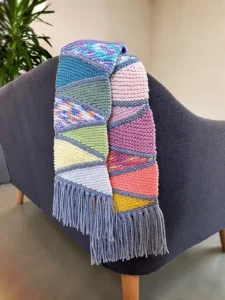
Diagonal Mosaic Scarf – Scrap Yarn Knitting Pattern
Looking for a free knitting pattern that makes the most of your yarn leftovers? This easy scrap yarn project transforms small amounts of yarn into a colorful mosaic-inspired scarf using only knit stitches, purl stitches, and simple short rows. It’s a relaxing way to use your stash while creating a one-of-a-kind accessory. Whether you’re knitting for yourself, making thoughtful handmade gifts, adding to your craft market inventory or an easy charity knitting project, this quick scarf is as practical as it is beautiful. No two scarves will ever be exactly alike, making every project a unique reflection of the yarn you already have on hand. And if you’re in the mood, this is a part of a set! You can also make the matching winter beanie 😊 It’s free to read on this website. Tap the photo or button to start reading it now. Mosaic Scrap Yarn Beanie Knitting Pattern Click here to read Will there be ends to sew in? Not if you catch the ends as you knit! I have a video that shows you how to do it when making knit stitches. That video is here. I added how to catch the ends when purling in a photo tutorial in the Hints and Tips section at the end of this post. Check the Table of Contents for the link. Keep scrolling. https://youtu.be/1_zF6HAzsfY If you would prefer the printable version of the pattern (it includes the matching hat pattern), I have a number of online retailers you can buy it from including online at KweenBee on Shopify, Etsy and Buy Me A Coffee. I also have the paperback booklet and Kindle versions available on Amazon. You can find it here – United States, Canada, United Kingdom, and Australia. Don’t forget to share this pattern with anyone you think may like it on your social media accounts. It’s free for everyone to use and it’s a great way to support my work without paying a single cent. I even included the handy share button right here 👇🏼 Scrap Scarf Pattern (Set Width) Things You Will Need Set of 4 mm (6 US) single pointed needles Tapestry needle to sew the seams and work in ends Worsted weight yarn scraps or 2 coordinated colours. Any standard ball of yarn bought at a big box store will be enough. The amount of scrap yarn you’ll need for each section will differ depending on the size you make. For the largest size, the scrap ball needs to be the size of a bottom of a pop or soda can. There will be a bit leftover. Sizing There is no sizing for this. Make it as long or as wide (or narrow as you like). Gauge In garter stitch. Gauge is not overly important for this. The garter stitch used makes it very stretchy. size 4 mm (US size 6) single pointed needles 9 stitches every 2 inches (5 cm) 16 rows every 2 inches (5 cm) Colour Notations I had to use something to delineate between colour changes. You will have more colours than what I list here if using scrap yarn. OC – other colour (scrap yarn colours or main colour) HC – highlight colour (colour between sections) Please note: This scarf can easily be made wider or narrower. I wrote the pattern again without specific st counts after the main pattern. Cast on 25 sts Row 1 and 2: HC K across * Row 3: With HC K1. OC K to end of row. Row 4: K to last st. Leave HC st unworked. Turn Row 5: With HC K2. Wth OC K to end of row. Row 6: K to last 3 st. Leave 3 HC st unworked. Turn Row 7: With HC K2. Wth OC K to end of row. Row 8: K to last 5 st. Leave 5 HC st unworked. Turn Row 9: With HC K2. Wth OC K to end of row. Row 10: K to last 7 st. Leave 7 HC st unworked. Turn Row 11: With HC K2. Wth OC K to end of row. Row 12: K to last 9 st. Leave 9 HC st unworked. Turn Row 13: With HC K2. Wth OC K to end of row. Row 14: K to last 11 st. Leave 11 HC st unworked. Turn Row 15: With HC K2. Wth OC K to end of row. Row 16: K to last 13 st. Leave 13 HC st unworked. Turn Row 17: With HC K2. Wth OC K to end of row. Row 18: K to last 15 st. Leave 15 HC st unworked. Turn Row 19: With HC K2. Wth OC K to end of row. Row 20: K to last 17 st. Leave 17 HC st unworked. Turn Row 21: With HC K2. Wth OC K to end of row. Row 22: K to last 19 st. Leave 19 HC st unworked. Turn Row 23: With HC K to end of row. Row 24: K to last 21 st. Leave 21 HC st unworked. Turn Row 25: With HC K2. Wth OC K to end of row. Row 26: K to last 23 st. Leave 23 HC st unworked. Turn. If changing to a new colour, break OC now. If making the scarf 2 colours do NOT break. Row 27: With HC K2. Row 28: K across Row 29: P across More of My Stuff On Etsy Row 30: P1 With OC P to the end of the row. Row 31: P to last st. Leave HC st unworked. Turn Row 32: With HC P2. Wth OC P to end of row. Row 33: P to last 3 st. Leave 3 HC st unworked. Turn Row 34: With HC P2. Wth OC P to end of row. Row 35: P to last 5 st. Leave 5 HC st unworked. Turn Row 36: With HC P2. Wth OC P to end of row. Row 37: P to last 7 st. Leave 7 HC st unworked. Turn Row 38: With HC P2. Wth OC P to end of row. Row 39: P to last 9 st. Leave 9 HC st unworked. Turn Row 40: With HC P2. Wth OC P to end of row. Row 41: P to last 11 st. Leave 11 HC st unworked. Turn Row 42: With HC Read more
Read more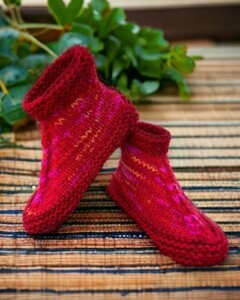
Bulky Yarn Slippers on Straight Needles – FREE Knitting Pattern
If you’ve run across any of my slipper patterns before this, one thing you’ll be very familiar with is my unreasonable dislike for sewing seams on projects. I equally dislike working in ends (go to How to Work in Ends While Knitting for more on this). I have a embarrassing amount of nearly finished projects that collect in a box with unsewn seams and dangling ends. Yes. I just admitted that to everyone. No shame in my game. This is another attempt to make this happen. It’s quite difficult to make something seamless when the design calls for it to be knit flat on 2 needles. This automatically means there are going to be ends that need to meet at some point. The idea is to make them meet as you knit so they are permanently fixed together with no extra work. Don’t forget to share this pattern with your family and friends! You can use these buttons☝🏼☝🏼☝🏼 This pattern starts with the cast on stitches going around the foot (sans heel). You’ll then work your way up to the top cuff. I’ve pointed out where we’re starting in this photo. I have a bunch of other slipper patterns you can read right here on my website. If you go to this page – FREE Slipper Patterns, you can see everything I have written to date. If you’re looking for other extra thick slippers like this, I’ve written another entitled Easy to Knit Beginner Slipper Pattern – Knit Flat with Bulky Yarn. As always, if you would prefer a printable paper version of this pattern, you can purchase and download the PDF from all of my usual sites. You can make a purchase from my Shopify shop. You can also purchase a download from my other online retailers which are LoveCrafts, Etsy, Buy Me a Coffee, and Ravelry. Things You Need Worsted weight yarn – 2 (two) standard balls of yarn (215 yards/197 m). Any colours of your choosing. or Super Bulky yarn – 2 standard balls of ONE colour with matching lot numbers (90 yards/82 m). One ball makes one slipper. There will be some yarn left over from each ball. Size 5 mm (size 8 US) knitting needles (or whatever you require to get the correct gauge). Tapestry needle to sew the seam and work in the ends. Gauge In stockinette stitch 8 sts – 5 cm (2″) 7 rows – 5 cm (2”) Sizes are written as such: Women 6-7 (8-9, 10-11, 12) Men 6 (7-8, 9-10, 11-12) The Pattern Cast on 56 (60, 64, 68) Knit across for 6 (6, 8, 8) rows. Next Row: K26 (28, 30, 32) K2tog. Sl 1 as if to knit. K1 PSSO. K26 (28, 30, 32). Next Row: P25 (27, 29, 31) P2tog TBL. P2tog. P25 (27, 29, 31). Next Row: K24 (26, 28, 30) K2tog. Sl 1 as if to knit. K1 PSSO. K24 (26, 28, 30). Next Row: P23 (25, 27, 29) P2tog TBL. P2tog. P23 (25, 27, 29). Next Row: K22 (24, 26, 28) K2tog. Sl 1 as if to knit. K1 PSSO. K22 (24, 26, 28). Next Row: P21 (23, 25, 27) P2tog TBL. P2tog. P21 (23, 25, 27). Next Row: K20 (22, 24, 26) K2tog. Sl 1 as if to knit. K1 PSSO. K20 (22, 24, 26). Next Row: P19 (21, 23, 25) P2tog TBL. P2tog. P19 (21, 23, 25). Next Row: K18 (20, 22, 24) K2tog. Sl 1 as if to knit. K1 PSSO. K18 (20, 22, 24). Next Row: P17 (19, 21, 23) P2tog TBL. P2tog. P17 (19, 21, 23). Next Row: K16 (18, 20, 22) K2tog. Sl 1 as if to knit. K1 PSSO. K16 (18, 20, 22). Next Row: P15 (17, 19, 21) P2tog TBL. P2tog. P15 (17, 19, 21). Next Row: K14 (16, 18, 20) K2tog. Sl 1 as if to knit. K1 PSSO. K14 (16, 18, 20). Next Row: P13 (15, 17, 19) P2tog TBL. P2tog. P13 (15, 17, 19). If making women’s size 6-7 or men’s size 6, go to the row marked with ☺. *Next Row: K4 M1. K0 (10, 12, 14). K2tog. Sl 1 as if to knit. K1 PSSO. K0 (10, 12, 14). M1 K4. Next Row: P2 PM1. P0 (12, 14, 16). P2tog TBL. P2tog. P0 (12, 14, 16). PM1 P2.* Repeat from * to * 0 (1, 2, 3) times more. ☺Knit across for 6 (6, 8, 8) rows. Cast off loosely. Making the Sole This photo will help you in how and where to pick up the following stitches. Hold your work so it looks like this with the pointy end up. The RED arrow is for right handed knitters. Pick up 6 sts at the toe in bottom loop of cast on stitches. (3 sts on either side of middle clearly marked with p2tog line.) Next Row: Knit across. Next Row: Pick up a stitch in the bottom loop of the cast on stitches. K6. Pick up a stitch in the bottom loop of the cast on stitches. Next Row: Knit across. Next Row: Pick up a stitch in the bottom loop of the cast on stitches. K8. Pick up a stitch in the bottom loop of the cast on stitches. Next Row: Knit across. If you are making women’s sizes 6-9 or men’s sizes 6-8, skip to row marked with ♥ For all other sizes continue as follows: Next Row: Pick up a stitch in the bottom loop of the cast on stitches. K10. Pick up a stitch in the bottom loop of the cast on stitches. Next Row: Knit across. ♥ ☼ Next Row: Pick up a stitch in the bottom loop of the cast on stitches. K2tog. Knit to last 2 sts. K2tog. Pick up a stitch in the bottom loop of the cast on stitches. Next Row: Knit across. ☼ Repeat rows marked with ☼ to ☼ down the length of the sole. You will ALWAYS have 10 (10, 12, 12) sts on your needle. Forming the Heel There are two ways to do this. The easiest way is to make a small triangle. Using the 10 (10, 12, 12) sts on your needle. ♦ Next 2 Rows: Knit across. Next Row: K2tog. Knit to last 2 sts. K2tog. Next Row: Knit across. ♦ Repeat from ♦ to ♦ until 5 (5, 6, 6) sts If making women’s sizes 6-9 or men’s sizes 6-8: Next Row: K2tog K1 K2tog. Next Row: K3tog. Cut yarn and draw yarn through last st. Leave a length of yarn long enough to sew the remaining seam. If making women’s sizes 10-12 or men’s sizes 9-12: Read more
Read more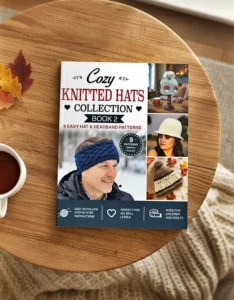
Cozy Knitted Hat Collection: Book 2
I’ve just finished and released Cozy Knitted Hat Collection Book 2, a new knitting pattern collection filled with easy hat and headband designs. This collection includes 9 knitting patterns for hats, beanies, headbands, and winter accessories, all designed to be worked flat on straight needles. If you enjoy knit flat hat patterns, easy beanie knitting patterns, and simple straight needle knitting projects, this collection keeps things relaxed, practical, and beginner-friendly. If you’ve already seen Book 1, you can find that here – Cozy Knitted Hat Collection: Book 1, this is the next collection in the series. It follows the same easy-to-follow style with a fresh set of cozy, wearable designs. If purchasing is NOT an option for you, that’s ok! Keep scrolling down the page. You can read ALL of the patterns for FREE on my website. Each one is listed further down the page. Inside you’ll find a mix of classic everyday hats and creative projects, including textured beanies, warm winter headbands, a bucket hat, and stash-busting scrap yarn designs. Each pattern includes clear instructions, and video tutorials are included to help guide you through the steps. If you are looking to purchase, please make sure that you go to your correct region. If you are an Amazon Prime member then shipping is free and will get to you in days. Immediately if you order the Kindle version. United States Canada United Kingdom Australia If you are outside of those regions you may still be able to get it. Please let me know. If you would prefer the lesser cost of printing it yourself, you can buy from my usual online retailers. You can buy this on Etsy and in my Shopify shop. *Attention – Buy Me A Coffee Members* If you are a member and support my work on Buy Me A Coffee, you can download the PDF of this book with all 9 patterns for FREE along with Book 1 of this series. There’s a lot more patterns there, as you probably know, but this makes it a bit more convenient for you to get. Click the button below to get started on your download. Make sure you’re logged in, add it to your cart and make your “purchase”. The cost turns to zero and you can check out with no additional charge. Buy Me A Coffee Not a member, it’s super easy to become one. Click one of the buttons below. And if none of these are a viable option for you, I get it, money is tight these days, all of my patterns including these, are free to read right here on my website. Tap the photo and start knitting!
Read more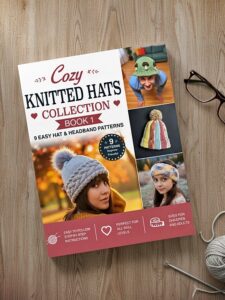
Cozy Knitted Hat Collection: Book 1
If you’re looking for a knitting book filled with easy-to-follow projects, the paperback edition of Cozy Knitted Hat Collection: Book 1 brings together 9 knit-flat hat and headband patterns in one convenient volume. This 8 x 10 paperback is designed for knitters who enjoy straightforward construction, wearable accessories, and projects that fit easily into busy days. If purchasing is NOT an option for you, that’s ok! Keep scrolling down the page. You can read ALL of the patterns for FREE on my website. Each one is listed further down the page. Inside you’ll find a mix of seasonal designs, including cozy winter beanies, lightweight bucket hats, and warm ear warmer headbands. All the patterns are worked flat on straight needles, making them approachable for beginners while still offering satisfying projects for more experienced knitters. The collection also includes a scrap-yarn hat pattern, perfect for stash busting, charity knitting, craft fairs, and handmade gifts. And did I mention Cozy Knitted Hat Collection: Book 2 is now done! If you are looking to purchase, please make sure that you go to your correct region. If you are an Amazon Prime member then shipping is free and will get to you in days. Immediately if you order the Kindle version. United States Canada United Kingdom Australia If you are outside of those regions you may still be able to get it. Please let me know. If you would prefer the lesser cost of printing it yourself, you can buy from my usual online retailers. You can buy this on Etsy and in my Shopify shop. *Attention – Buy Me A Coffee Members* If you are a member and support my work on Buy Me A Coffee, you can download the PDF of this book with all 9 patterns for FREE! And now that Book 2 is done, you can get even more! Click the button below to get started on your download. Make sure you’re logged in, add it to your cart and make your “purchase”. The cost turns to zero and you can check out with no additional charge. Buy Me A Coffee Not a member, it’s super easy to become one. Click one of the buttons below. And if none of these are a viable option for you, I get it, money is tight these days, all of my patterns including these, are free to read right here on my website. Tap the photo and start knitting!
Read more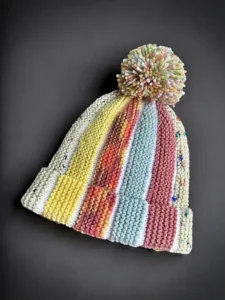
Free Knitting Pattern: Scrap Yarn Hat – Bobble Beanie & Fisherman Hat
This is a free knitting pattern for a scrap busting beanie, featuring two hat styles: a bobble beanie and a fisherman-style hat. Knit flat with an easy 14-row repeat, it’s a simple, beginner-friendly project that’s perfect for scrap yarn or a clean two-colour finish. Inspired by my original Easy Scrap Yarn Bobble Beanie, this pattern also works beautifully with planned colour combinations. The slim highlight stripes between sections help pull everything together into a neat, finished look, whether you go scrappy or coordinated. I made a video showing how I catch the yarn ends while knitting so they’re worked in automatically as you go. No going back later trying to weave in a hundred little tails. If you do it correctly, there are only 2 ends left to sew in when you’re done: the cast-on tail and the yarn tail left after sewing the seam. You can watch how to do that below. https://youtu.be/1_zF6HAzsfY If you would prefer the printable version of the pattern, I have a number of online retailers you can buy it from including online at KweenBee on Shopify, Etsy, Ravelry and Buy Me A Coffee. I also have the paperback booklet and Kindle versions available on Amazon. Don’t forget to share this pattern with anyone you think may like it on your social media accounts. It’s free for everyone to use and it’s a great way to support my work without paying a single cent. I even included the handy share button right here 👇🏼 This isn’t my first winter hat I’ve designed. It’s have many more than what’s listed here. Clicking any of the photos below will take you right to the FREE pattern to make it. Click Me for ALL Hats and Beanies! Things You Will Need Set of 4 mm (6 US) single pointed needles Tapestry needle to sew the seams and work in ends Worsted weight yarn scraps or 2 coordinated colours. Any standard ball of yarn bought at a big box store will be enough. The amount of scrap yarn you’ll need for each section will differ depending on the size you make. For the largest size, the scrap ball needs to be the size of a bottom of a pop or soda can. There will be a bit leftover. The ball of yarn on the bottom of a soda can for comparison. Gauge In stockinette stitch. Gauge is not overly important for this. The garter stitch used makes it very stretchy. size 4 mm (US size 6) single pointed needles 10 stitches every 2 inches (5 cm) 14 rows every 2 inches (5 cm) Sizing Sizing is written as such: Small (Medium, Large, X-Large) All age and sizing references in this pattern are estimates and based on the measurement around the head (circumference). Small – Kids 1-5 years (18 inches or 46 cm) Medium – Kids 6-10 (20 inches or 50 cm) Large – Kids ages 11 to small adults (22 inches or 56 cm) X-Large – People 24 inches or 61 cm and up Colour Notations I had to use something to delineate between colour changes. You will have more colours than what I list here if using scrap yarn. Depending in the size, it could be 10 – 13 colours. OC – other colour (scrap yarn colours or main colour) HC – highlight colour (colour between sections) Please note, this is a VERY forgiving pattern with a LOT of stretch. Short Fisherman’s Beanie This beanie is made in sections that are knit from the crown of the head down toward the forehead, not in rows going around the head like a traditional beanie. Cast on 38 (42, 45, 47) with OC ♥ Row 1: HC K1. OC K28 (31, 33, 34) P9 (10 , 11, 12) Row 2: P8 (9, 10, 11). K29 (32, 34, 35). Turn. Leave remaining 1 st unworked. Row 3: HC K2. OC K26 (29, 31, 32) P9 (10 , 11, 12) Row 4: P8 (9, 10, 11). K27 (30, 32, 33). Turn. Leave remaining 3 sts unworked. Row 5: HC K2. OC K24 (27, 29, 30) P9 (10 , 11, 12) Row 6: P8 (9, 10, 11). K25 (28, 30, 31). Turn. Leave remaining 5 sts unworked. Row 7: HC K2. OC K22 (25, 27, 28) P9 (10 , 11, 12) Row 8: P8 (9, 10, 11). K23 (26, 28, 29). Turn. Leave remaining 7 sts unworked. Row 9: HC K2. OC K20 (23, 25, 26) P9 (10 , 11, 12) Row 10: P8 (9, 10, 11). K21 (24, 26, 27). Turn. Leave remaining 9 sts unworked. Row 11: HC K2. OC K18 (21, 23, 24) P9 (10 , 11, 12) Row 12: P8 (9, 10, 11). K19 (22, 24, 25). Turn. Leave remaining 11 sts unworked. If changing to a new colour, break OC now. If making the hat 2 colours do NOT break. Row 13: HC K18 (21, 23, 24) P9 (10 , 11, 12) Row 14: K9 (10 , 11, 12). P29 (32, 34, 35). ♥ Repeat from ♥ to ♥ 8 (9, 10, 11) times more for 9 (10, 11, 12) sections total. More of My Stuff On Etsy! Tall Bobble Beanie This beanie is made in sections that are knit from the crown of the head down toward the forehead, not in rows going around the head like a traditional beanie. Cast on 42 (47, 52, 57) with OC ♦ Row 1: HC K1. OC K32 (36, 40, 44) P9 (10 , 11, 12) Row 2: P8 (9, 10, 11). K33 (37, 41, 45). Turn. Leave remaining 1 st unworked. Row 3: HC K2. OC K30 (34, 38, 42) P9 (10 , 11, 12) Row 4: P8 (9, 10, 11). K31 (35, 39, 43). Turn. Leave remaining 3 sts unworked. Row 5: HC K2. OC K28 (32, 36, 40) P9 (10 , 11, 12) Row 6: P8 (9, 10, 11). K29 (33, 37, 41). Turn. Leave remaining 5 sts unworked. Row 7: HC K2. OC K26 (30, 34, 38) P9 (10 , 11, 12) Row 8: P8 (9, 10, 11). K27 (31, 35, 49). Turn. Leave remaining 7 sts unworked. Row 9: HC K2. OC K24 (28, 32, 36) P9 (10 , 11, 12) Row 10: P8 (9, 10, 11). K25 (29, 33, 37). Turn. Leave remaining 9 sts unworked. Row 11: HC K2. OC K22 (26, 30, 34) P9 (10 , 11, 12) Row 12: P8 (9, 10, 11). K23 (27, 31, 35). Turn. Leave remaining 11 sts unworked. If changing to a new colour, break OC now. If making the hat 2 colours do NOT break. Row 13: HC K22 (26, 30, 34) P9 (10 , 11, 12) Row 14: K9 (10 , 11, 12). P33 (37, 41, 45). ♦ Repeat from ♦ to ♦ 8 (9, 10, 11) times more for 9 (10, 11, 12) sections total. Hints and Tips Each section measures approximately 2 inches (5 cm) wide if your gauge is similar to what is given. Use yarns with different textures and variegated colours to create truly unique beanies! Make Read more
Read more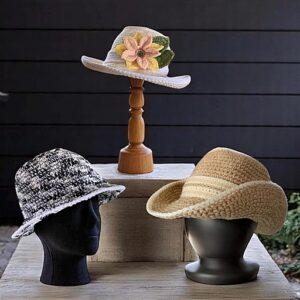
Crocheted Sun Hat and Bucket Hat – FREE Crochet Pattern
Gussy it up or wear it plain, this crocheted hat pattern is extremely versatile and makes hats for nearly anyone. Anyone but my 14 year old son apparently, who said, with his usual unenthusiastic honesty, “I don’t like it but it fits OK”. How do I know this? I needed to borrow his head to see how the smaller size fit and felt when wearing, so I guess it’s at least fit approved ¯\_(‘~’)_/¯ crochet sun hat – FREE crochet pattern If you would prefer to have a KNITTED version of the bucket hat, I have that too! Click this link – Knit Bucket Hat for Children and Adults – FREE Pattern to start making hats for the entire family, kids included! I recently added mushrooms to the bucket hat! You can read that pattern here – Knit Flat Mushroom Bucket Hat for Adults. This hat can be made a number of ways, either as a wider brimmed sun hat with a flower, plain with the brim shaped similar to a cowboy/cowgirl hat, or with a narrower brim to be a bucket hat. Any way you choose is going to be a success! It’s easy to make, and as long as you know the basics of crochet. Literally if you know how to chain, single crochet (sc) and do a slip stitch (sl st), you’ll be able to make the hat. The flower can be a bit more tricky but I’ve included many photos and detailed descriptions to help you along. The hat is made with 2 strands worsted weight yarn (or one strand of super bulky yarn) and a larger crochet hook. The stitches need to be fairly tight so the hat will hold it’s shape. Anything larger than the gauge given will make it floppy and the sizing may not work out as written. But, like all my patterns, play with it! If you want a floppy hat, no one said you can’t. There aren’t any specific measurements for the hat sizing. It’s all very general as there is some stretch to the hat when finished and will form to fit the head it’s covering. If you want your hat to fit a little looser, go for the bigger size. The way I thought of it when I was designing this hat, if it fit the glass head, it’s a small/medium size. In other words, a regular sized head. If it fits me and looks a little too big on the glass head, it’s a large/extra large. Let me put it this way. I know I have a big head. If you have ever thought you too might have a big head because hats don’t always fit you, hello fellow large head! If this statement makes no sense to you, go for the small/medium. If you are looking to make the flower and the leaves, they each have their own page on the website. This pattern turned into a bit of a beast as it is. Both patterns are included with the printable PDF version of the sun and bucket hat. Crochet Flower Pattern Crochet Leaf Pattern If you don’t want to or are unable to make a financial donation, sharing this pattern through social media is a great way to help out too! The links below are a super easy way for you to do so. If you would like to avoid the ads on this page or would like to print the pattern, you can purchase the PDF for a small fee from mu Shjopify shop here – Sun Hat with Gorgeous Flower or Simple Bucket Hat – Printable Crochet Pattern, through my Etsy shop, LoveCrafts or on Ravelry. You can also purchase the paperback on Amazon or the Kindle version. You can also get the PDF for FREE if you are a member on Buy Me A Coffee. More about that below. Like all of my patterns you have my permission to sell and/or give away the physical items that you make using this pattern. You are NOT permitted to reprint this pattern in any form unless you have obtained my written permission to do so. Small/Medium Large/Extra Large Abbreviations Ch – chain sc – single crochet sl st – slip stitch hdc – half double crochet dc – double crochet trc – treble crochet st – stitch sts – stitches Things You Need: 6 mm (US 10 or J) crochet hook (or what ever size hook you need to get the correct gauge) 3.5 mm (US 4 or E) crochet hook for top edging, flowers and leaves (all optional) 2 balls Worsted Weight yarn or 1 ball Super Bulky yarn (for the hat itself) For the sun hat you’l need: 106 gr or 3.7 oz each of the worsted weight colours (216 m or 237 yards) or 173 gr or 6 oz Super Bulky yarn (170 m or 185 yards) of course it’s less yarn for the bucket hat. Worsted weight yarn (for band, flowers, leaves and edging) Stitch markers (at least 8 but it never hurts to have more. See Hints and Tips section) Tapestry needle (to sew band and flowers, work in the ends) Gauge With 2 strands of worsted weight yarn or 1 strand of super bulky yarn 13 sts = 4” 14 rows = 4” Check your gauge to obtain correct sizing and density of the final fabric created. The stitching needs to be tight to hold the hat shape. Small/Medium With 2 strands of worsted weight yarn or 1 strand of super bulky yarn and your 6 mm (US 10 or J) crochet hook… Ch 2 (make the first chain large enough to fit in all the stitches for Round 1) Round 1: 12sc around. Do NOT join. The following rounds are worked without joining. Round 2: Sc in first sc of previous round. 2sc in the next stitch. *Sc in next stitch. 2sc in the next stitch.* Repeat from * to * around. Place stitch marker. (18 sts) Round 3: *2sc. 2sc in the next stitch.* Repeat from * to * Read more
Read more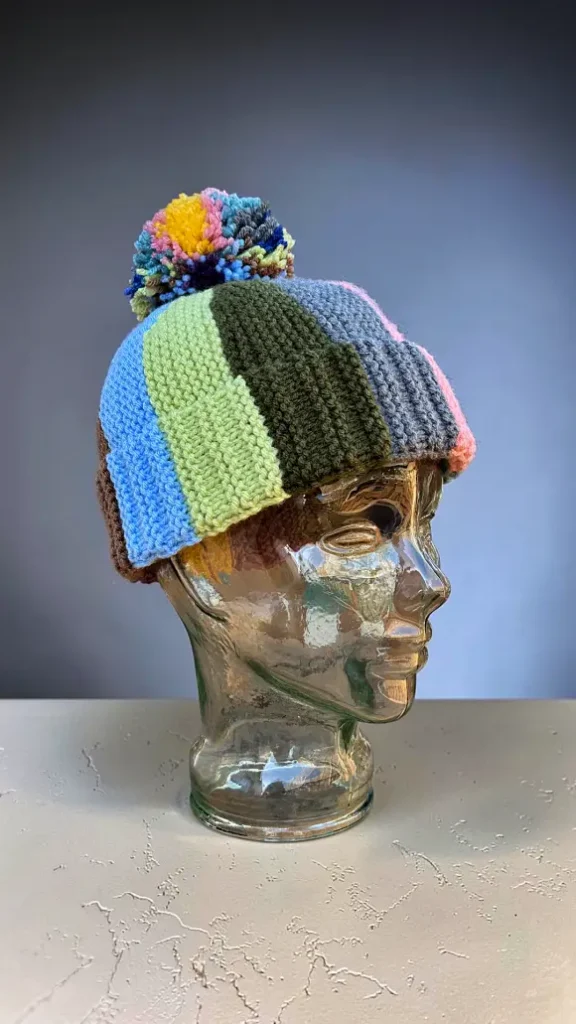
Easy Scrap Yarn Bobble Beanie Free Knitting Pattern
This easy bobble beanie knitting pattern is the perfect scrap yarn project for using up leftover yarn from bigger knits instead of letting it sit forgotten in a basket or closet forever. Knit flat on straight needles, this cozy winter hat can be made in sizes from children to adults and is a fun way to mix colours and create unique combinations with your yarn stash. No two hats ever turn out the same. These scrap yarn beanies are great for gifting, craft sales, or charity knitting because they use yarn you already have on hand, making them an affordable and practical knit. And before anyone says it… no, you won’t be stuck weaving in a million yarn ends afterward. I made a tutorial showing how I work in yarn ends while knitting so they’re caught automatically as you go. If done correctly, there are only 2 ends left to sew in when the hat is finished – the cast on end and the end used to sew the seam. You can watch the full tutorial below. https://youtu.be/1_zF6HAzsfY If you would prefer the printable version of the pattern, I have a number of online retailers you can buy it from including online at KweenBee on Shopify, Etsy, Ravelry and Buy Me A Coffee. I also have the paperback booklet and Kindle versions available on Amazon. Links coming soon! Don’t forget to share this pattern with anyone you think may like it on your social media accounts. It’s free for everyone to use and it’s a great way to support my work without paying a single cent. I even included the handy share button right here 👇🏼 This isn’t my first winter hat I’ve designed. It’s have many more including a crocheted version. Clicking any of the photos below will take you right to the FREE pattern to make it. Make it in crochet. Fits everyone! And has a full how to video. I wrote another scrap hat. This one is even easier to make and looks a bit more refined. Click Me for ALL Hats and Beanies! Things You Will Need Set of 4 mm (6 US) single pointed needles Tapestry needle to sew the seams and work in ends Worsted weight yarn scraps. The amount of yarn you’ll need for each section will differ depending on the size you make. For the largest size, the ball needs to be the size of a bottom of a pop or soda can. There will be a bit leftover. The ball of yarn on the bottom of a soda can for comparison. Gauge In stockinette stitch. Gauge is not overly important for this. The garter stitch used makes it very stretchy. size 4 mm (US size 6) single pointed needles 10 stitches every 2 inches (5 cm) 14 rows every 2 inches (5 cm) I had to use something to delineate between colour changes. You will have more colours than what I list here. Depending in the size, it could be 9 – 12 colours. FC – first colour NC – next colour AOC – another colour Sizing Sizing is written as such: Small (Medium, Large, X-Large) All age and sizing references in this pattern are estimates and based on the measurement around the head (circumference). Small – Kids 1-5 years (18 inches or 46 cm) Medium – Kids 6-10 (20 inches or 50 cm) Large – Kids ages 11 to small adults (22 inches or 56 cm) X-Large – People 24 inches or 61 cm and up Please note, this is a VERY forgiving pattern with a LOT of stretch. And here is the video on how to work in the ends as you knit, in case you missed it earlier 😊 https://youtu.be/1_zF6HAzsfY The Pattern This beanie is made in sections that are knit from the crown of the head down toward the forehead, not in rows going around the head like a traditional beanie. Cast on 38 (42, 45, 47) with FC Row 1: With NC K1. FC K28 (31, 33, 34) P1 K8 (9, 10, 11) Row 2: K37 (41, 44, 46). Turn. Leave last st unworked. Row 3: With NC K2. FC K26 (29, 31, 32) P1 K8 (9, 10, 11) Row 4: K35 (39, 42, 44). Turn. Leave remaining 3 sts unworked. Row 5: NC K2. FC K24 (27, 29, 30) P9 (10, 11, 12) Row 6: K33 (37, 40, 42). Turn. Leave remaining 5 sts unworked. Row 7: NC K2. FC K22 (25, 27, 28) P1 K8 (9, 10, 11) Row 8: K31 (35, 38, 40). Turn. Leave remaining 7 sts unworked. Row 9: NC K2. FC K20 (23, 25, 26) P1 K8 (9, 10, 11) Row 10: K29 (33, 36, 38). Turn. Leave remaining 9 sts unworked. Row 11: NC K2. FC K18 (21, 23, 24) P9 (10, 11, 12). Row 12: K27 (31, 34, 36). Turn. Leave remaining 11 sts unworked. Row 13: NC K2. FC K16 (19, 21, 22) P1 K8 (9, 10, 11) Row 14: K25 (29, 32, 34). Turn. Leave remaining 13 sts unworked. Row 15: NC K2 FC K14 (17, 19, 20) P1 K8 (9, 10, 11) Row 16: K23 (27, 31, 32). Turn. Leave remaining 15 sts unworked. Break FC. Row 17: NC K14 (17, 19, 20) P9 (10, 11, 12) Row 18: P8 (9, 10, 11) K30 (33, 35, 36). More of My Stuff On Etsy ♥ Row 19: AOC K1. NC K28 (31, 33, 34) P1 K8 (9, 10, 11) Row 20: K37 (41, 44, 46). Turn. Leave remaining 1 st unworked. Row 21: AOC K2. NC K26 (29, 31, 32) P9 (10, 11, 12). Row 22: K35 (39, 42, 44). Turn. Leave remaining 3 sts unworked. Row 23: AOC K2. NC K24 (27, 29, 30) P1 K8 (9, 10, 11) Row 24: K33 (37, 40, 42).Turn. Leave remaining 5 sts unworked. Row 25: AOC K2. NC K22 (25, 27, 28) P1 K8 (9, 10, 11) Row 26: K31 (35, 38, 40). Turn. Leave remaining 7 sts unworked. Row 27: AOC K2. NC K20 (23, 25, 26) P9 (10, 11, 12) Row 28: K29 (33, 36, 38). Turn. Leave remaining 9 sts unworked. Row 29: AOC K2. NC K18 (21, 23, 24) P1 K8 (9, 10, 11) Row 30: K27 (31, 34, 36). Turn. Leave remaining 11 sts unworked. Row 31: AOC K2. NC K16 (19, 21, 22) P1 K8 (9, 10, 11) Row 32: K25 (29, 32, 34). Turn. Leave remaining 13 sts unworked. Break NC yarn. Row 33: AOC K16 (19, 21, 22) P9 (10, 11, 12). Row 34: P8 (9, 10, 11) K30 (33, 35, 36) ♥ Repeat from ♥ to ♥ 7 (8, 9, 10) more times for a total of 9 (10, 11, 12) sections. When making your last section, the K1 colour at the start of row 19 should be the same colour of your first section. Continue to make all the K2 sts that are not worked this colour as well. The side on Read more
Read more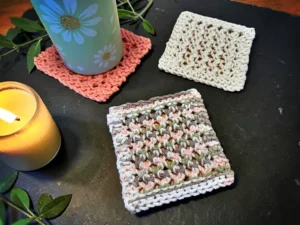
4 Row Lattice Dishcloth and Coasters – FREE Knitting Pattern
I wanted an easy knit dishcloth pattern that works up quickly, is simple to follow, and has a clean, textured look. This knit dishcloth is worked flat on straight needles using a 4 row repeat that’s easy to memorize and relaxing to knit. This beginner-friendly knit dishcloth and coaster pattern is perfect for confident new knitters and anyone looking for a quick knitting project. The repetitive stitch pattern keeps it easy to do while creating a textured dishcloth that looks more detailed than it is. This pattern plays nicely with whatever size you’re in the mood for. Keep it small and you’ve got a tidy little coaster or a handy kitchen scrubby. Let it grow with more repeats of the four rows and it stretches into a scarf with a really satisfying texture. Tweak it, resize it, make it yours… just keep one rule in your back pocket: when you cast on, it always needs to be an odd number. If you are loving this pattern, please share it with your friends! It’s one of the easiest ways you can support my work and encourage future free patterns that anyone can make. Because the pattern is so short, it’s not for sale in any of my usual places. If you support my work on Buy Me a Coffee, I added it there for you as a bonus here – 4 Row Lattice Dishcloth and Coasters. I listed it at the regular price for my patterns but TBH there really is no reason for anyone to buy this one. It’s 4 rows. I have also created a full how-to video showing how to make this. It’s great for any beginner knitter and shows you how to do everything, slowly, from how to cast on to working in the ends when you’re done. https://youtu.be/y2GioaVIwg0 Things You Will Need Cotton Worsted weight yarn (less than a standard ball will be more than enough). Set of 4 mm (6 US) single pointed needles Tapestry needle to sew the seams and work in ends Gauge In stockinette stitch size 4 mm (US size 6) single pointed needles 10 stitches every 2 inches (5 cm) 14 rows every 2 inches (5 cm) The Pattern Cast on 15 (27) sts Rows 1 – 4: K across ♠ Row 5: K1 * K2tog from RIGHT to LEFT. YO * Repeat from * to * to the last 2 sts. K2 If you need help with this row, you can watch how to do it with this handy video. It starts playing at the exact spot where you need to start. https://youtu.be/y2GioaVIwg0?t=190 Row 6: K2 P to the last 2 sts. K2 Row 7: K2 ♦ YO K2tog ♦ Repeat from ♦ to ♦ to the last st. K1. Help for this row is qued up below. https://youtu.be/y2GioaVIwg0?t=310 Row 8: As row 6 ♠ Repeat from ♠ to ♠ 5 (12) more times for a total of 6 (13) repeats. End with row 7. Next 3 rows: K across. Cast off RIGHT side. This is what the stitch pattern looks like in detail. More of My Stuff on Etsy Hints and Tips Stitch counts are the same for every row. The number of sts you cast on are the number of sts at the end of every row. Don’t forget the YO before the last 2 knit stitches for row 5. If you’re short a st that’s probably where you missed it. Like most, if not all, dishcloth patterns, you can easily make more rows to make it into a scarf. For this specific pattern, if you would like it narrower or wider cast on more or less stitches. Cast on an ODD number of stitches. Abbreviations K – Knit P – Purl K2tog – Knit 2 sts together. sts – stitches st – stitch YO – Yarn over
Read more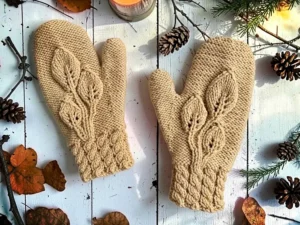
Free Knitting Pattern for Leaf Mittens on Straight Needles
If you’re looking for a free knitting pattern for leaf mittens knit flat on straight needles, these Autumn Leaves Mittens are a cozy and elegant choice for fall and winter. Designed with three textured leaf motifs across the back of the hand, this pattern brings a beautiful nature-inspired detail to classic knit mittens. The leaves are worked in different sizes to fit naturally across the hand, creating a balanced and eye-catching design. Best of all, these mittens are knit flat and seamed, making them perfect for knitters who prefer working with straight needles instead of double pointed needles. This intermediate mitten knitting pattern is ideal for knitters who are comfortable with basic stitches and ready to try textured knitting techniques. The leaf motif uses simple shaping to create depth and dimension, and video tutorials are included to help guide you through the more detailed steps. If you’ve been searching for a free knit mitten pattern on straight needles, a flat knit mitten pattern with a leaf design, or cozy handmade mittens for women, this pattern is a rewarding project that results in warm, stylish mittens. If you need help with sts, check the Abbreviations section. I’ve included descriptions of how to make them and embedded videos where I could. Scroll down the page or use the Table of Contents. If you would prefer the printable version of the pattern, I have a number of online retailers you can buy it from including my online KweenBee on Shopify, Etsy, and Buy Me A Coffee. Don’t forget to share this pattern with anyone you think may like it on your social media accounts. It’s free for everyone to use and it’s a great way to support my work without paying a single cent. I even included the handy share button right here 👇🏼 If you would like to make a matching winter set, you can! Right now I have the matching headband/ ear warmer, a bobble beanie and slouchy hat. I’m planning n making a matching scarf too. I’m not sure when I’ll get to it. I’ve got a lot going on right now 😊 You can tap or click on either pic below if you would like to read the FREE patterns on this website. Things You Will Need Worsted weight yarn (less than a standard ball will be more than enough). I used Red Heart worsted weight yarn when designing the pattern but any kind will do. Set of single pointed needles (see note on sizing) Stitch holder Tapestry needle to sew the seams and work in ends Cable needle Sizing Like my other fingerless gloves I’ve designed such as my owl fingerless gloves, I use the size of the needles to change the size of the mitt. This keeps the proportion of the design consistent to the size of the mitten. My standard for sizing was my hand and designed the knitting pattern according to what kind of rubber gloves fit me comfortably. I wear a medium sized rubber glove and the medium sized glove fits perfectly. You may need to use different sized needles to get the correct gauge. Gauge In stockinette stitch Small size 3.5 mm (US size 4) single pointed needles 11 stitches every 2 inches (5 cm) 16 rows every 2 inches (5 cm) Medium size 4 mm (US size 6) single pointed needles 10 stitches every 2 inches (5 cm) 14 rows every 2 inches (5 cm) Large size 5 mm (US size 8) single pointed needles 9 stitches every 2 inches (5 cm) 12 rows every 2 inches (5 cm) Right Hand Cast on 41 Row 1: * P1 K4 * Repeat from * to * to the last st. P1 Row 2: ◊ K1 P4 ◊ Repeat from ◊ to ◊ to the last st. K1 ♥ Row 3: * P1 C4f * Repeat from * to * to the last st. P1 Row 4: as row 2 Row 5: as row 1 Row 6: as row 2 ♥ Repeat from ♥ to ♥ two more times. Row 15: As row 3 Row 16: As row 2 Row 17: P5 P2tog P3 P2tog K1 PM1 K2 P5 * P2tog P3 * Repeat from * to * 3 more times. P4. (36 sts) Row 18: K22 P2 K1 P1 K10 Row 19: P10 K1 P1 K2 P22 Row 20: K22 P2 K1 P1 K10 Row 21: P9 C1B P1 K2 P22 Row 22: K13 INC K1 INC K6 P2 K2 P1 K9 (38 sts) Row 23: P9 M1 K1 M1 P2 K1 C1F P23 (40 sts) Row 24: K23 P1 K1 P1 K2 P3 K9 Row 25: P9 K1 YO K1 YO K1 P2 K1 P1 C1F P22 (42 sts) Row 26: K13 INC K3 INC K4 P1 K2 P1 K2 P5 K9 (44 sts) Row 27: P9 K2 YO K1 YO K2 P2 K1 P2 K1 P24 (46 sts) Row 28: K24 P1 M1 K2 P1 K2 P7 K9 (47 sts) Row 29: P9 TWK2tog K3 K2tog P2 K1 P3 M1 K1 M1 P24 (47 sts) Row 30: K13 INC K5 INC K4 P3 K3 P1 K2 P5 K9 (49 sts) Row 31: P9 TWK2tog K1 K2tog P2 K1 P3 K1 YO K1 YO K1 P26 (49 sts) Row 32: K26 P5 K3 P1 K2 P3 K9 Row 33: P9 Sl as if to knit K2tog PSSO P2 K1 P3 K2 YO K1 YO K2 P26 (49 sts) Row 34: K13 INC K7 INC K4 P7 K3 P1 K12 (51 sts) Row 35: P11 C1B P3 K3 YO K1 YO K3 P28 (53 sts) Row 36: K28 P9 K4 P1 K11 Row 37: P11 M1 K1 M1 P4 TWK2tog K5 K2tog P28 (53 sts) Row 38: K13 INC K9 INC K4 P7 K4 P3 K11 (55 sts) Row 39: P11 K1 YO K1 YO K1 P4 TWK2tog K3 K2tog P30 (55 sts) Row 40: K30 P5 K4 P5 K11 Row 41: P11 K2 YO K1 YO K2 P4 TWK2tog K1 K2tog P30 (55 sts) Row 42: K13 INC K11 INC K4 P3 K4 P7 K11 (57 sts) Row 43: P11 K3 YO K1 YO K3 P4 Sl as if to knit K2tog. PSSO. P4. Pass the next 15 sts onto a st holder. P13 (42 sts) Row 44: K22 Read more
Read more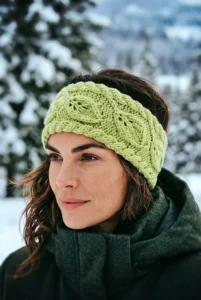
Autumn Leaf Winter Headband or Ear Warmer – FREE Knitting Pattern
This free knit flat headband pattern features a cozy autumn leaf design, perfect for knitters looking for a warm and stylish accessory without using circular needles. The double thick fabric provides extra warmth, while the textured leaf motif adds a beautiful seasonal detail. This pattern is worked flat on straight needles, making it a great choice for those who prefer simple construction methods. This is not a beginner knitting pattern, but it is ideal for knitters who know the basics and are ready to try a more advanced knit flat ear warmer or headband project. The pattern includes detailed written instructions, along with step by step photos and video tutorials to help guide you through the more challenging sections with confidence. If you need help with sts, check the Abbreviations section. I’ve included descriptions of how to make them and embedded videos where I could. Scroll down the page or use the Table of Contents. If you would prefer the printable version of the pattern, I have a number of online retailers you can buy it from including my online KweenBee on Shopify, Etsy, and Buy Me A Coffee. I also have the paperback booklet and Kindle versions available on Amazon. Don’t forget to share this pattern with anyone you think may like it on your social media accounts. It’s free for everyone to use and it’s a great way to support my work without paying a single cent. I even included the handy share button right here 👇🏼 This pattern is inspired by 3 patterns that I previously wrote. I’m in a habit of combining different elements of my patterns together to make a completely new thing. This is a bringing together of my Easiest Beanie You’ll Ever Knit, Autumn Leaf Fingerless Gloves, and my Autumn Leaf Winter Beanie Hat. You can see by the photos below, how the elements have come together. I’m also thinking of remaking the fingerless gloves to mitts that will match and a scarf, but those will be a while in coming. Let me know if you’d like me to get on that ASAP. Clicking on any of the pics will take you to the pattern 😉 Things you need Worsted weight (AKA – 4 or medium) yarn – one standard ball (515 yards / 471 m) will be more than enough with yarn left over. 1 set of size 4 mm (US size 6) single pointed needles Cable needle Tapestry needle (to work in ends) Bobble or pom pom of your choice. You can make or purchase one. Gauge With size 4 mm (US size 6) needles or whatever size you need to obtain the correct number of stitches and rows. Be sure to check your gauge. It doesn’t need to be exact but the closer the better. In garter st 17 sts = 4 inches or 10 cm 34 rows = 4 inches or 10 cm Sizing Notes First things first: let’s figure out how big to make the hat. When you’re going by age and gender, the measurements are only approximate – especially for kids. Adult sizes are more standardized: small, medium, large, and extra large. If the person’s head is handy, measuring it directly is always best. That said, knitting isn’t an exact science. It stretches and contracts as needed, especially with the garter stitch inside that this ear warmer uses. Child Sizing Data is based on World Health Organization and pediatric growth standards. You can also do an online search for sizing if you believe it to be inaccurate. Other organizations located in the USA, UK, etc give sizes as being slightly larger. A gentle reminder that this is knitting and it does stretch to accommodate close measurements. Close IS usually good enough in this case. This design is for children (5 ish) and older. The band is wide-ish and a heads any smaller than 20 inches (51 cm) will be too wide to fit comfortably on the forehead. Adult Sizing Small/Medium – 21 to 22 inches (53.5 – 56 cm) Large/Extra Large – 23 to 24 inches (57 – 61 cm) Band The band can be made as long as you like. It is what goes around the circumference of the head. Each leaf, when matching the gauge as given, is about 2.25 to 2.5 inches (5.71 to 6.35 cm) long. I found 8 leaves were a good length for a small/medium adult hat with 9 leaves fitting large/ex-large adult heads. Adjust accordingly for smaller sizes. Cast on 34 Row 1: K6 P2 K4 P9 K5 P2 K6 Row 2: K8 P4 C1B K8 P4 K8 If you need help with any of the stitches, there are videos in the Abbreviationssection to show you. Click this link – Helpful Video Tutorials Row 3: K6 P2 C4F P7 C1B P1 C4B P2 K6 ♥ Row 4: K8 P4 K2 C1B K6 P4 K8 Row 5: K6 P2 K4 P4 P2tog M1 K1 M1 P3 K4 P2 K6 (the photos show the second M1 in this row) Row 6: K8 P4 K3 P3 K5 P4 K8 Row 7: K6 P2 C4F P3 P2tog K1 YO K1 YO K1 P3 PM1 C4B P2 K6 Row 8: K8 P4 K4 P5 K4 P4 K8 Row 9: K6 P2 K4 P4 K2 YO K1 YO K2 P4 K4 P2 K6 Row 10: K8 P4 K4 P7 K4 P4 K8 Row 11: K6 P2 C4F P2 P2tog K3 YO K1 YO K3 P4 PM1 C4B P2 K6 Row 12: K8 P4 K5 P9 K3 P4 K8 Row 13: K6 P2 K4 P3 TWK2tog K5 K2tog P5 K4 P2 K6 Row 14: K8 P4 K5 P7 K3 P4 K8 Row 15: K6 P2 C4F P1 P2tog TWK2tog K3 K2tog P5 PM1 C4B P2 K6 Row 16: K8 P4 K6 P5 K2 P4 K8 Row 17: K6 P2 K4 P2 TWK2tog K1 K2tog P6 K1 M1 K3 P2 K6 Row 18: K8 P4 C1B K5 P3 K2 P4 K8 Row 19: K6 P2 C4F P2 Pick up the st as if to knit. K2tog PSSO. P4 C1B P1 C4B P2 K6 ♥ Repeat from ♥ to ♥ For as many times as required to achieve your desired length. End on Read more
Read more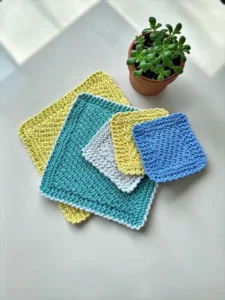
Crossed Stitch Dishcloth and Coasters – FREE Knitting Pattern
This free knit wascloth and coaster pattern knit flat on straight needles is a great way to add rich texture and interest to your everyday knitting projects. The crossed stitch knitting pattern creates a beautiful, eye-catching surface that looks intricate but is simple to learn, while the neat finished edge gives each piece a clean, polished look. It’s an ideal project for knitters who are comfortable with basic stitches and ready to try an easy textured knitting pattern with a unique twist. To help you every step of the way, this beginner-friendly knit dishcloth pattern includes photos and a video tutorial showing exactly how to work the backwards crochet edging (reverse crochet edge), so you can confidently complete your knitting project. Whether you’re looking for a handmade kitchen set, an easy knitted gift idea, or knit items to sell at craft fairs or online shops, these durable and practical knit dishcloths and coasters are designed to be both functional and beautifully textured. If you would like to print this pattern or read it without the ads, there are a few options. You can buy it from my Shopify shop here – Crossed Stitch Dishcloth and Coaster Printable Knitting Pattern, or purchase it from my Etsy shop or Buy Me A Coffee. If you are loving the free patterns, please consider helping me out offsetting the hosting costs of the website. You can learn more by going to this page – Help Support My Work. If you can’t make a small donation, that’s OK 👍 . Instead, you can help others see my work by using the share buttons. It’s such an easy thing to do and helps me so much. If you are interested, I also have a number of other dishcloth and coaster sets yo may be interested in. Click any photo below to read the pattern for free right here on my website. To read this pattern, continue scrolling down the page. Things You Will Need Size 4 mm (size 6 US) single point knitting needles 1 ball of crochet cotton yarn (the 1.5 oz balls are more than enough) Darning needle to work in the ends Size 3.5 mm (size 4 US) crochet hook (for edging. You may need larger or smaller depending on your tension) Gauge It’s not really important for a project like this. If you have larger needles it will make a bigger dishcloth or coaster that has a looser knit. A smaller needle gives a tighter knit and smaller coasters and washcloths. The pattern is written as such: Coaster (Dishcloth) The Pattern Cast on 18 (40) Row 1 – 4: K across Row 5: K2 P1 K12 (34) P1 K2 Row 6: K3 P12 (34) K3 ♥ Row 7: K2 P1 *sl the next st as if to P, K1, YO, PSSO the over the 2 sts * Repeat from * to * 5 (16) times more. P1 K2. Yarn under the needle. Yarn pulled over the needle. Pick up the st. Pass the st over. Row 8: As row 6 Row 9: K2 P1 K1 *sl the next st as if to P, K1, YO, PSSO the over the 2 sts * Repeat from * to * 4 (15) times more. K1 P1 K2. Row 10: As row 6 ♥ Repeat from ♥ to ♥ 3 (8) times more. Next row: As row 7 Next 3 rows: K across. Cast off right side. Do NOT break yarn. More of My Stuff On Etsy Edging To make things as easy as possible, I’ve added the video I made demonstrating how to do this technique: Backwards Crochet Edge for Knitting – Straight Edges for Sweaters, Shawls, Scarves Dishcloths & more. It’s basically a backwards single crochet (BC) that creates a more ropey kind of look. https://youtu.be/TinUbvKIgus You may have to play around a bit with the size of hook that’s going to work the best for you. For me, based on my tension for knitting the dishcloth and tension for how I crochet, a 3.5 mm crochet hook worked best. Row 1: With right side facing, and in the last cast off stitch, BC (backwards single crochet) around edge. BC in every 2nd cast off stitch along the top and every 2nd cast on st (twist) along the bottom edge. BC in every other row (ridge) along the sides. Join to the start of the row. Work in ends. I found there is enough slack that you don’t need multiple stitches in the corner. Hints and Tips If you want to make the coaster or dishcloth larger, cast on more sts. To keep it square, cast on 4 extra sts and work the repeat of the pattern one time for each additional 4 sts. If square doesn’t matter to you, then do what you wish. You can also drop the K2 P1 and P1 K2 at the ends of the rows and the garter st that starts and ends the pattern. Add a single K st on each end (right side) and P st on each end (wrong side). This edge will give a bit of an allowance to work with, if you want to do an edging or sew a seam. Like all dishcloths, you could easily make this into a scarf. Do as many repeats of the st pattern as you like. The how-to video changes the colour of the edging. If you prefer this look instead of a solid colour, break the yarn and start with the new colour. Abbreviations K – Knit P – Purl sl – Slip the next stitch, without working it, onto your working needle. YO – Yarn Over. Pull the yarn under and then over your needle. The yarn will form an extra stitch on your needle. PSSO – pass the slipped stitch over BC – Backwards single crochet Like all of my patterns you have my permission to sell and/or give away the physical items that you make using this pattern. You are NOT permitted to reprint this pattern in any form unless you have obtained my written permission to do so.
Read more
If you would like to see all of my knitting patterns, you can use this link…
FREE Knitting Patterns
Love the free knitting patterns and want to be kept up to date? You can email this page to yourself so you’ll always have the link handy. Maybe someone else would enjoy the patterns, too. I’ve added the automatic share links above. Be sure to post and share on your social media. Learn more about how you can Help Support My Work.
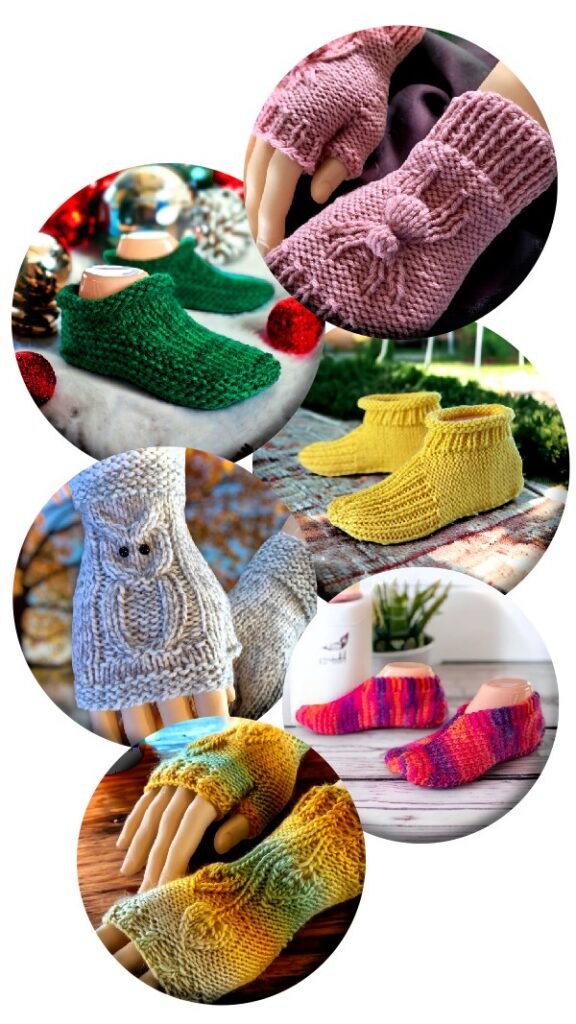

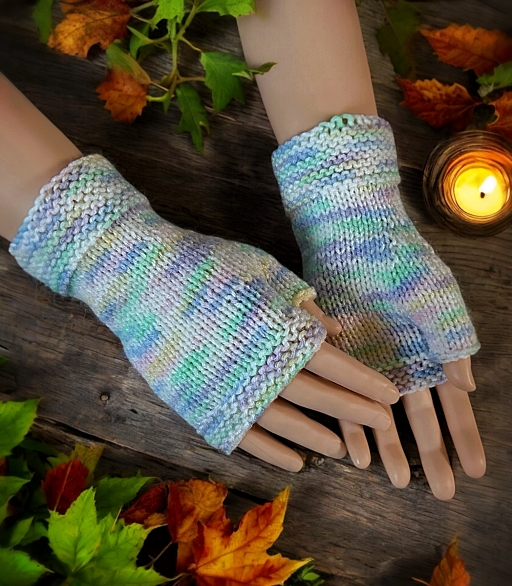
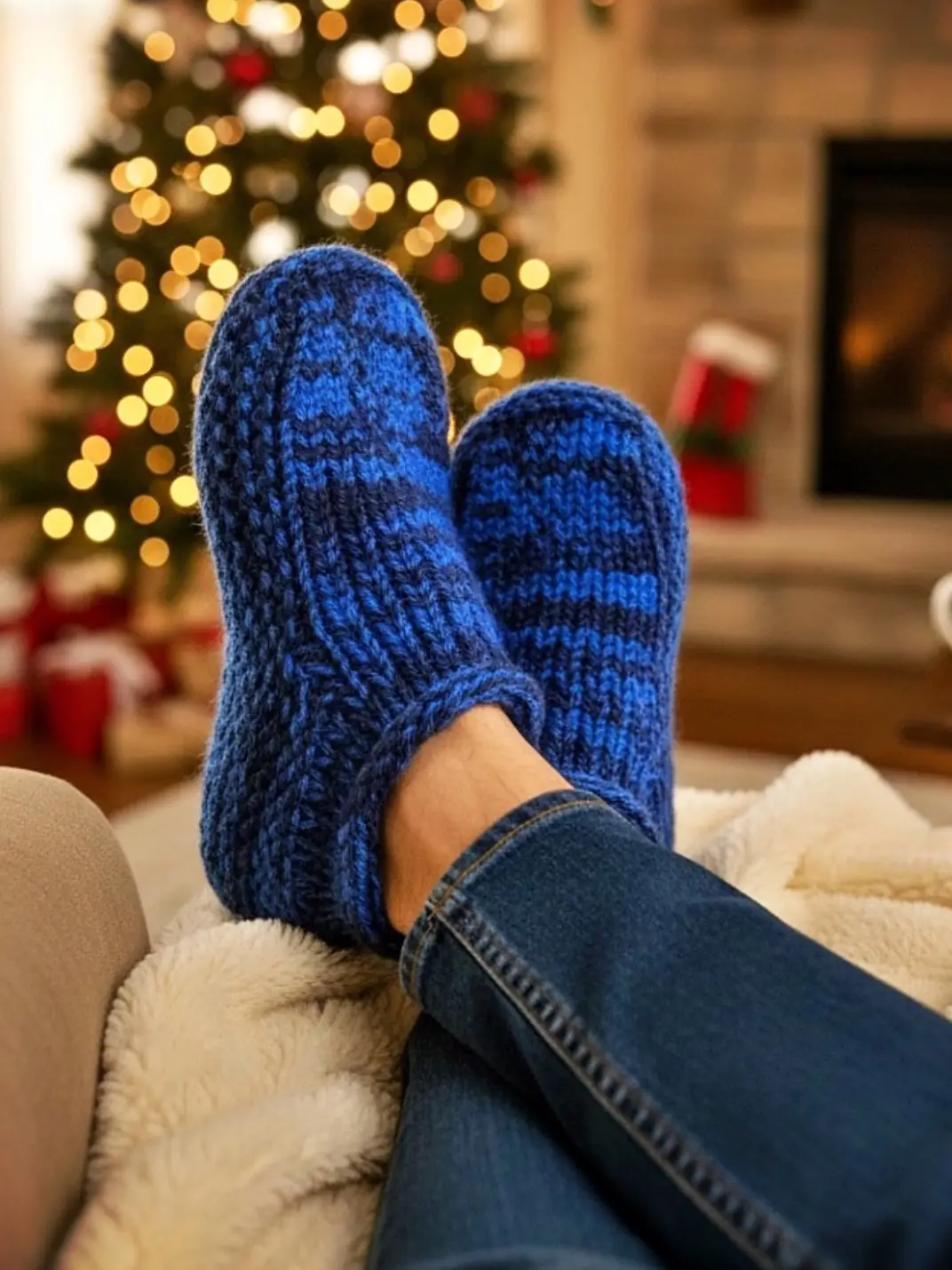
This pattern was so quick and very easy to follow! Im making pair #2.