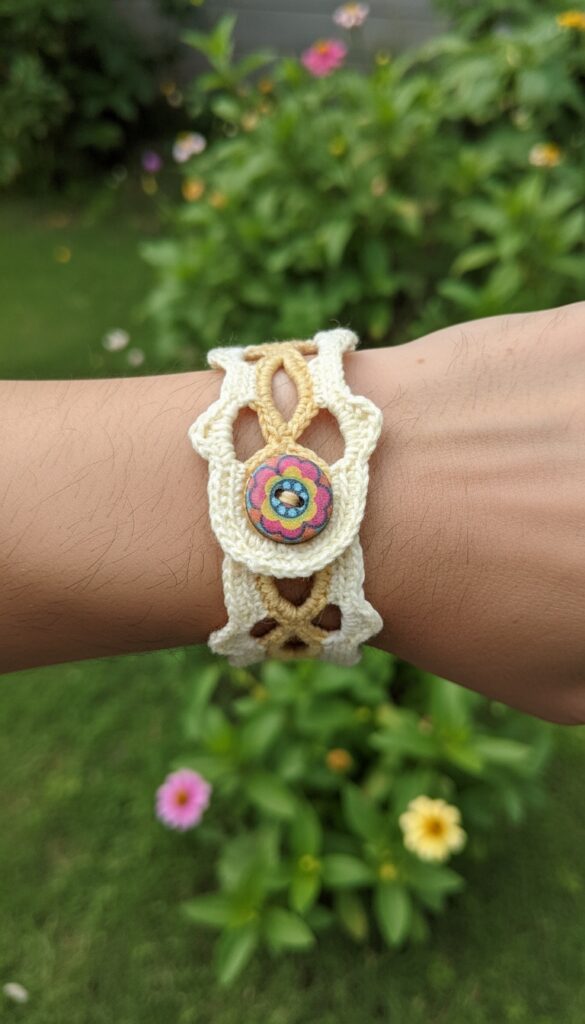
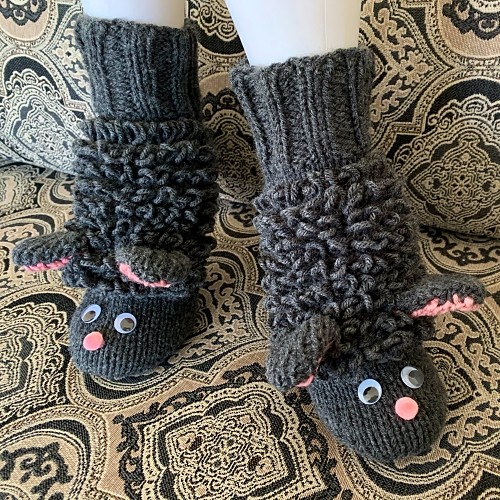
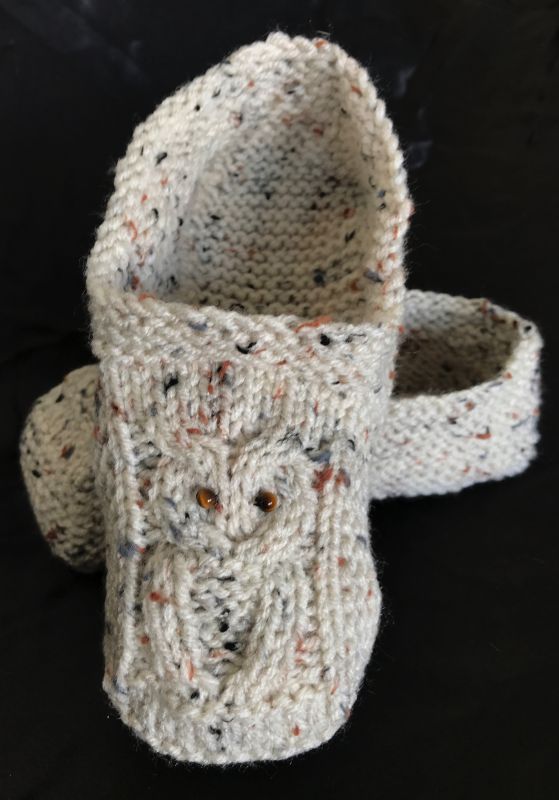
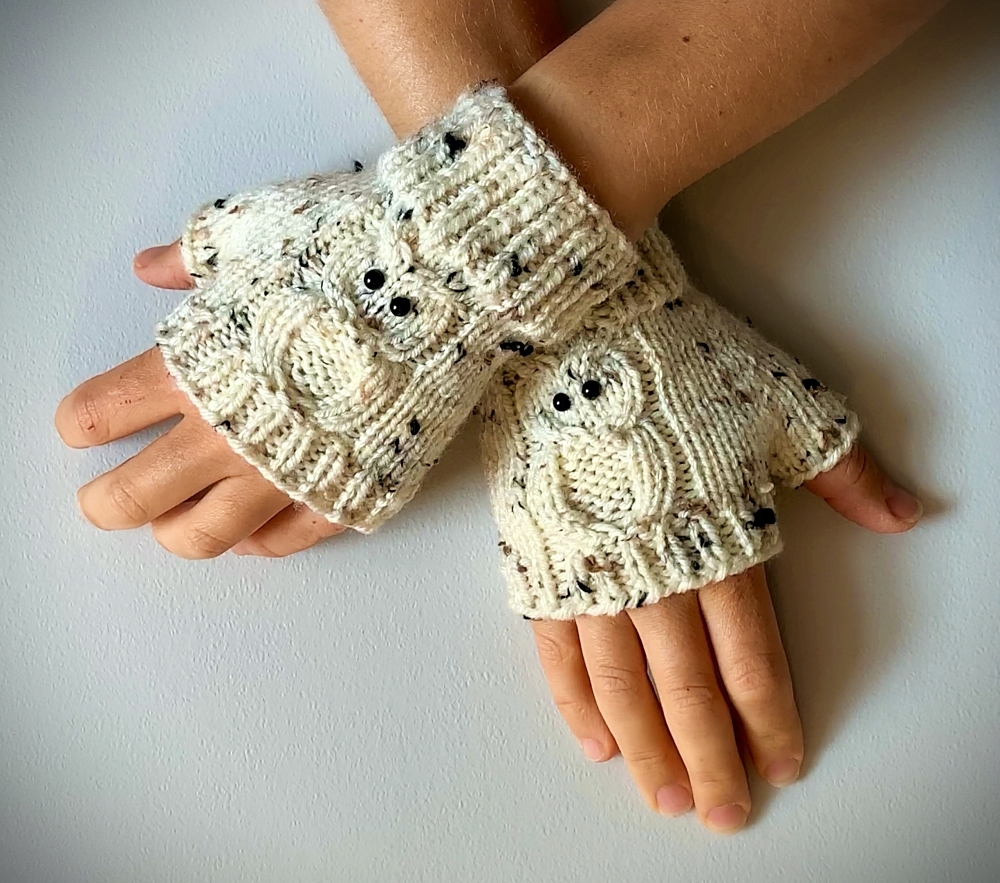
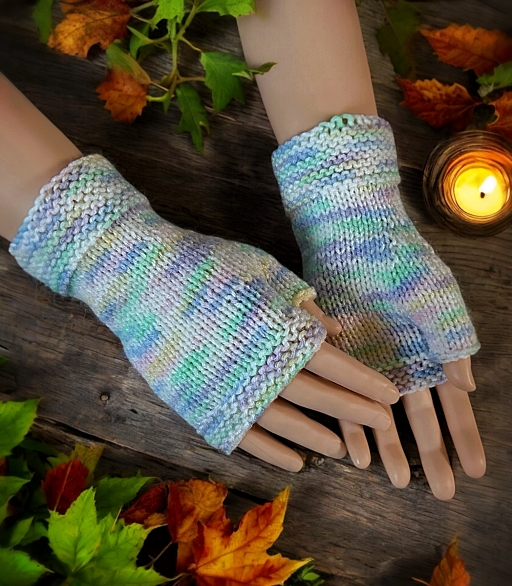
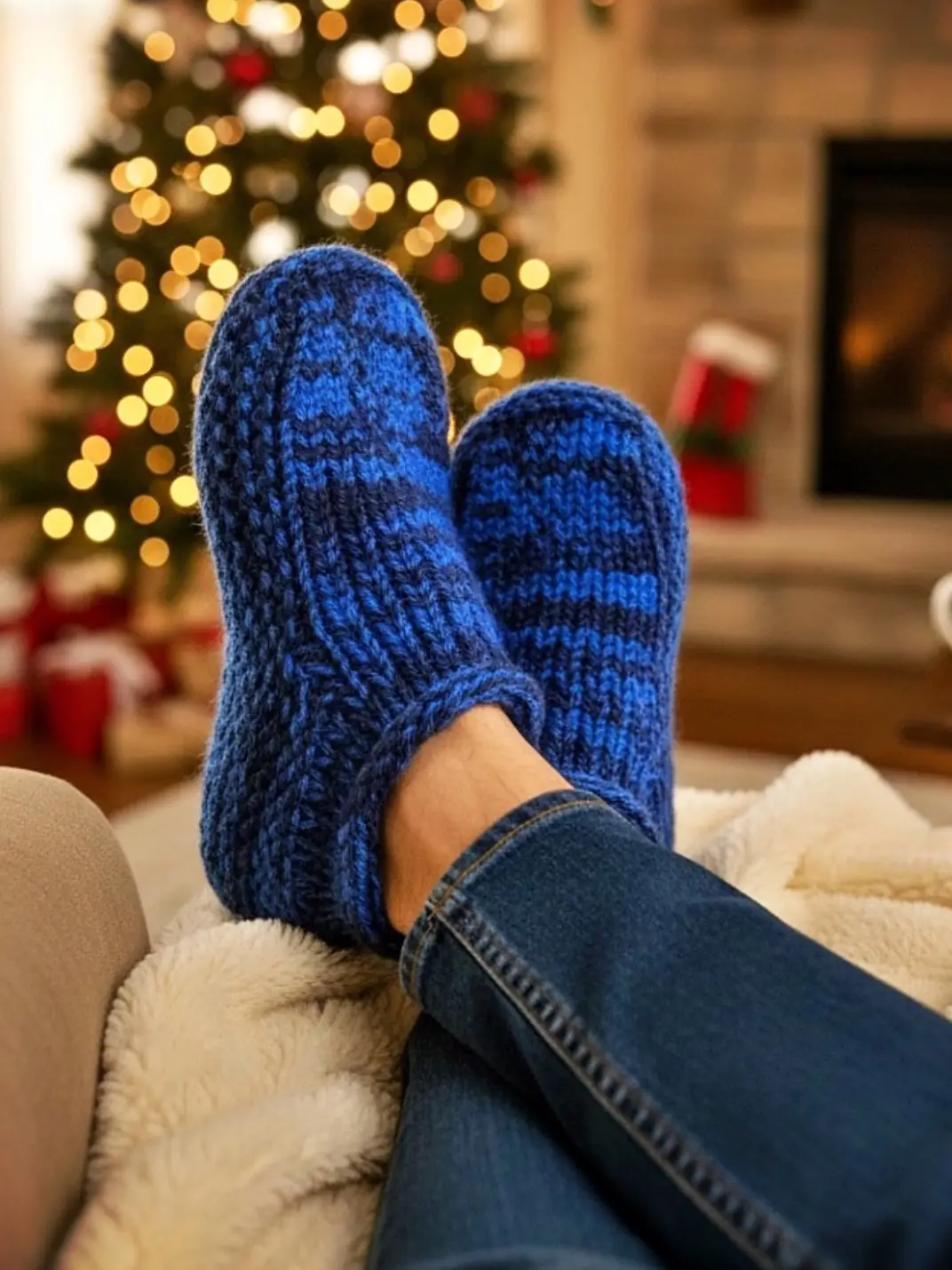
I first came up with this cable while designing another hat, my Woodland Wanderer Cable Hat. That design actually started as a riff on a pair of slippers, then wandered its way into a couple of headbands too. One idea tends to lead to another around here.
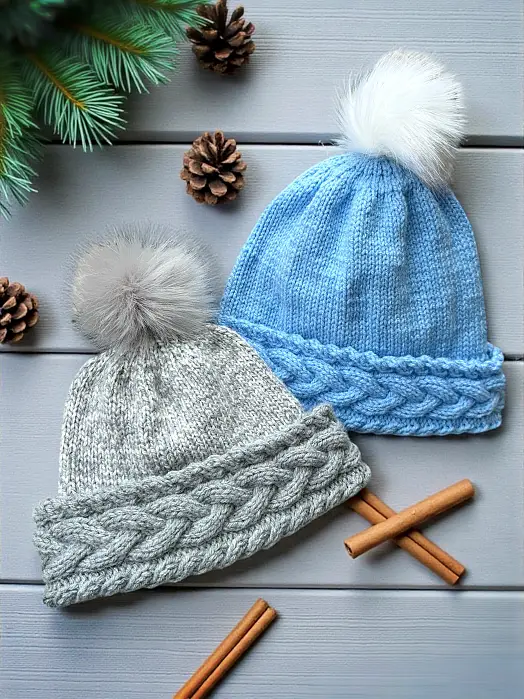

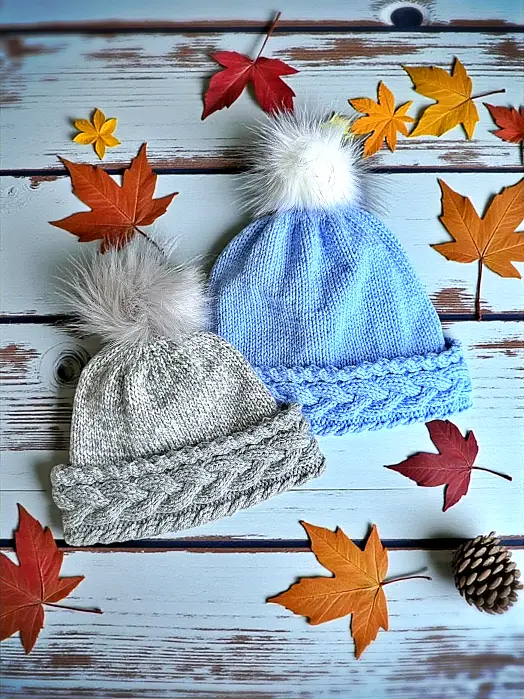

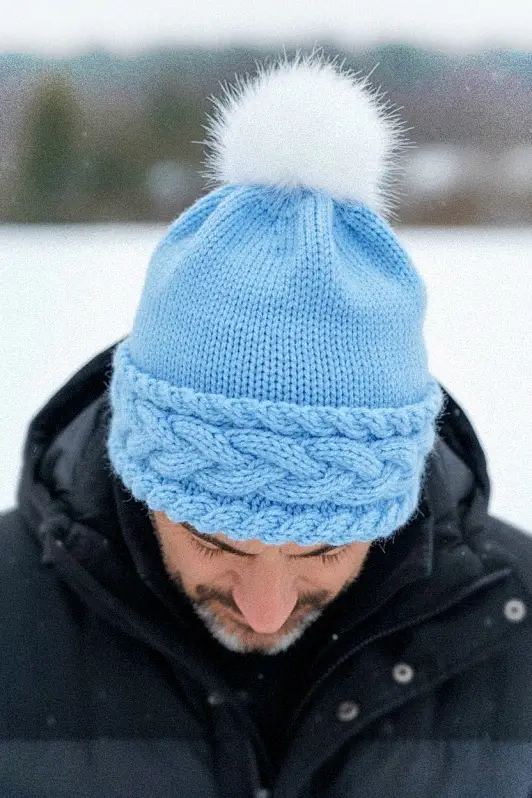
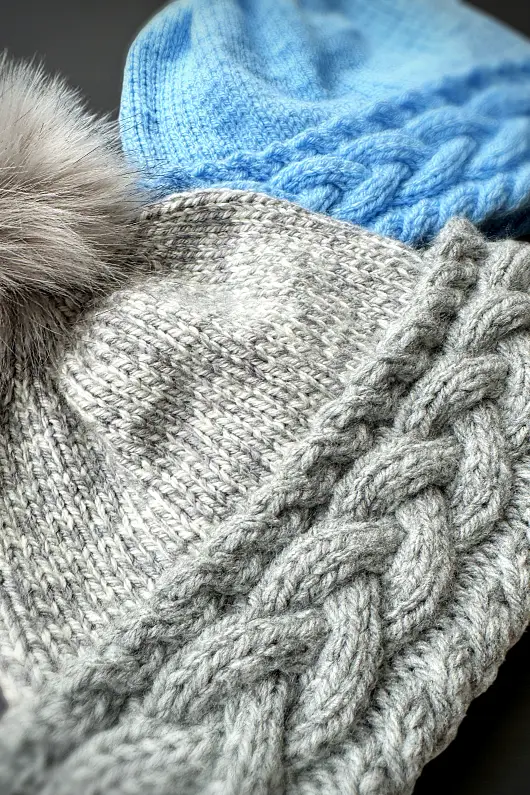



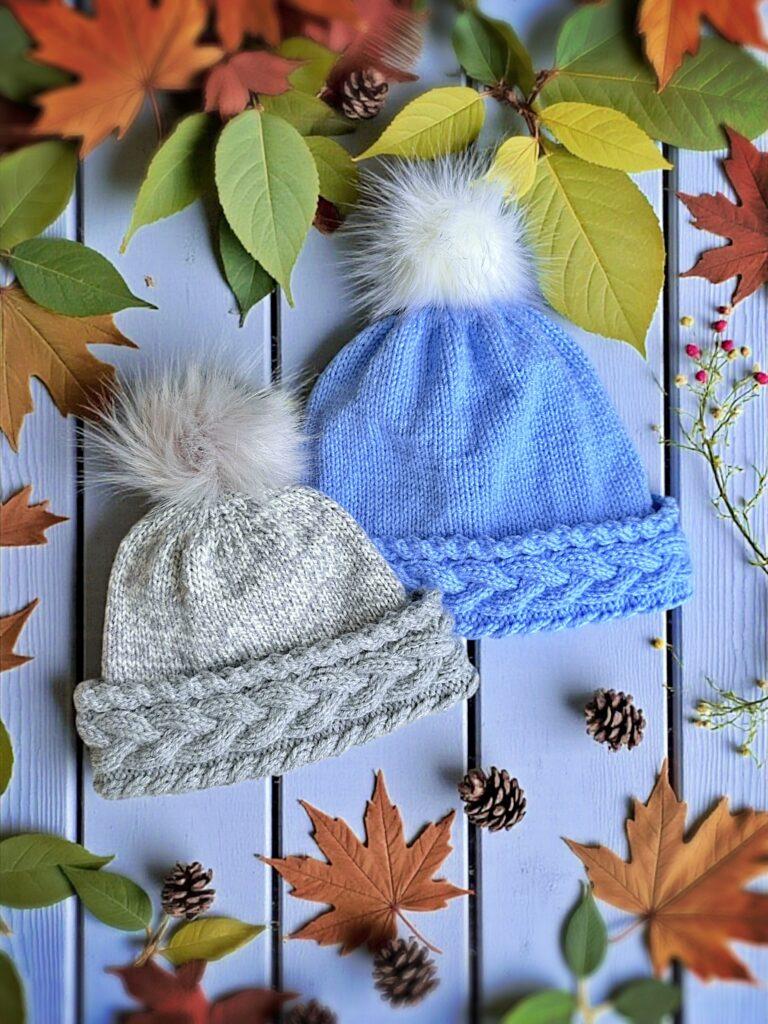
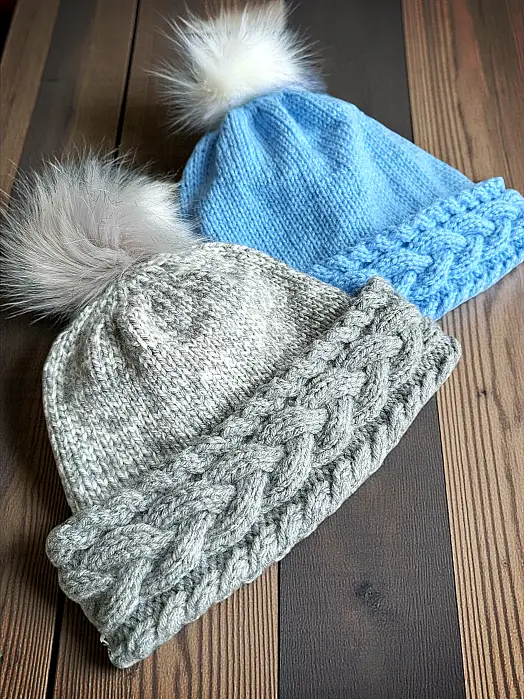
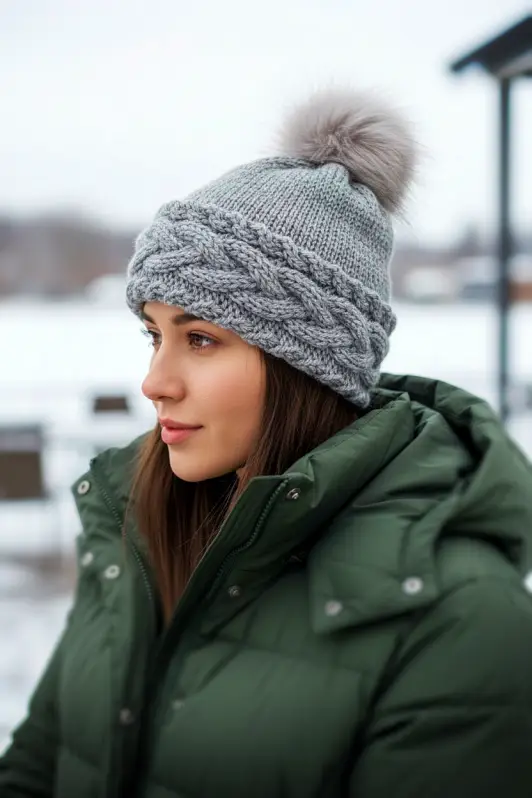

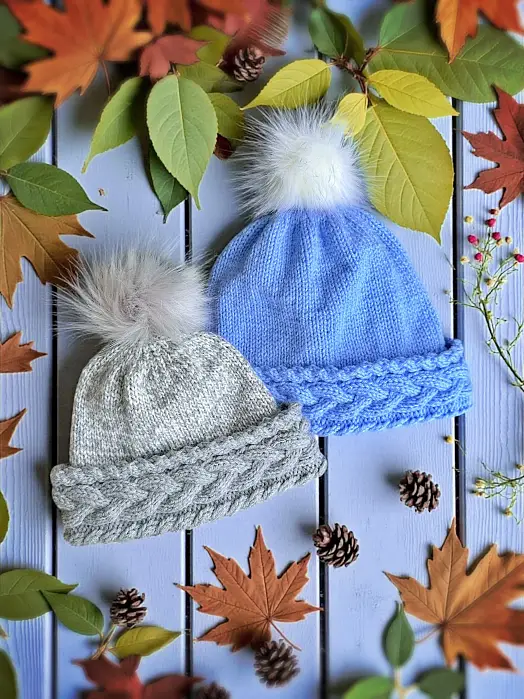

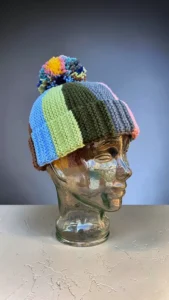
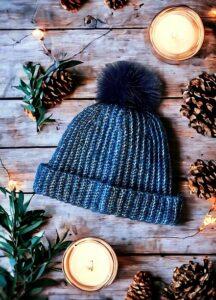
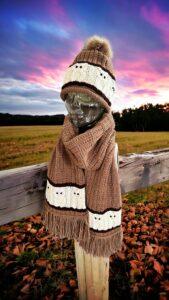
I eventually realized that not everyone loves winter headbands. Some people are firmly in the winter hat or toque camp. I already had a super easy winter hat pattern, so it only made sense to bring the cable and the hat together. And voilà! That’s how my cozy cable bobble hat came to be.
I’ve kept this pattern very basic, which makes it a great choice if you’ve never tried cables before and want to learn. To make things even easier, I’ve included links and QR codes in the Abbreviations section to helpful how-to videos that walk you through anything you might need a little extra guidance on.
If you would prefer the printable version of the pattern, I have a number of online retailers you can buy it from including my online KweenBee on Shopify, Etsy, Ravelry, and Buy Me A Coffee. I also have the paperback booklet and Kindle versions available on Amazon.
Another way to avoid ads and pop-ups, get instant, PRINTABLE downloads of this pattern and others, is by becoming a Member. When you become a Website Supporter at $4/month, you’ll gain access to exclusive member only posts on Buy Me A Coffee. You can download as many patterns as you like for the same $4 each month. You can go to this page to learn more, become a member and support my work… Exclusive Member Area
Loving the patterns and want to support my work but don’t want to become a member. That’s cool with me! I totally get it. If you still want to help, please share this pattern with your friends and family you think may enjoy making it. Use the handy buttons below to share on social media or send it to them directly,
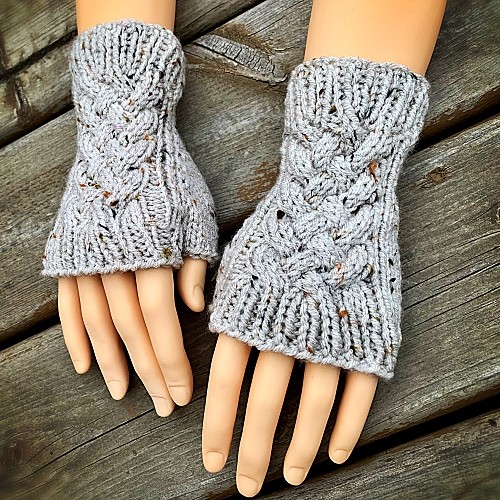
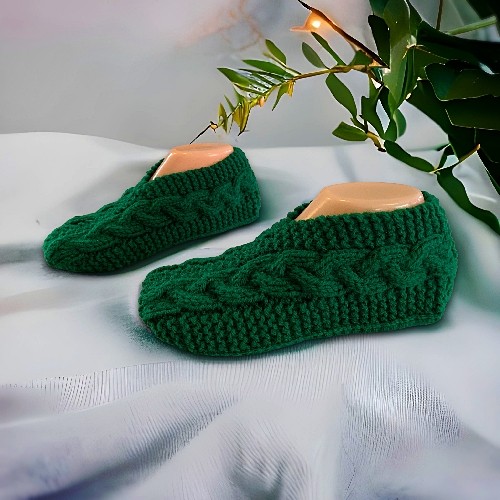
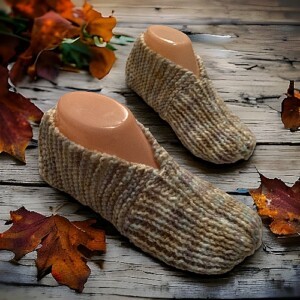
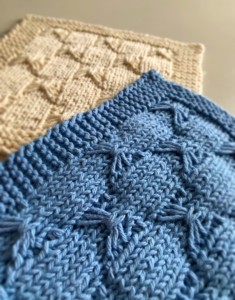
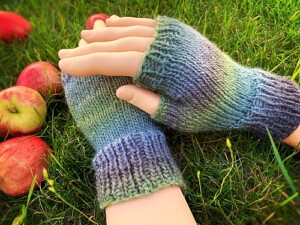
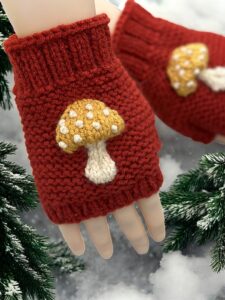
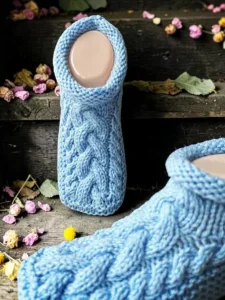
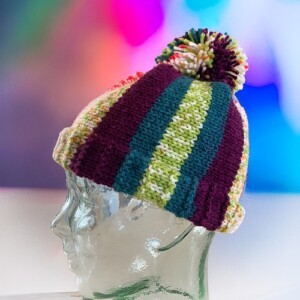
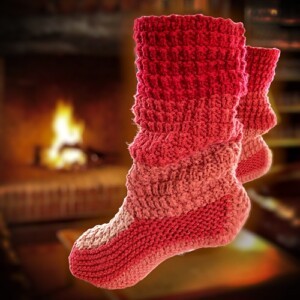
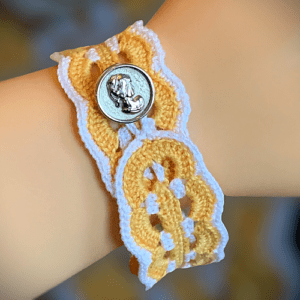
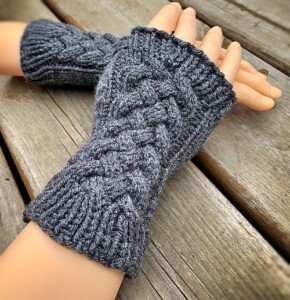
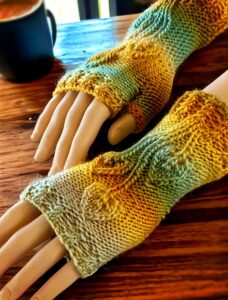
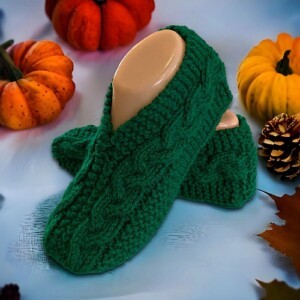
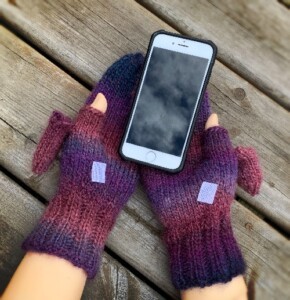
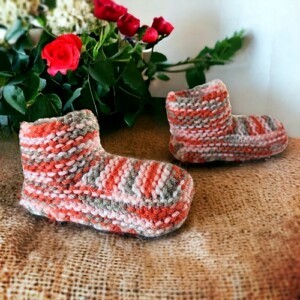
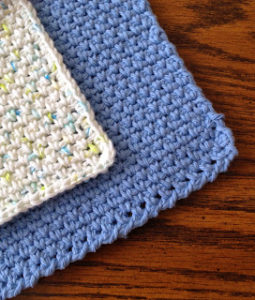
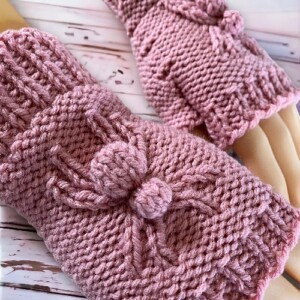
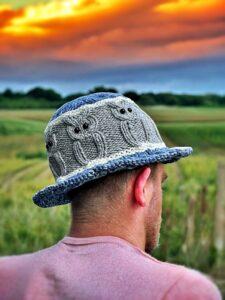
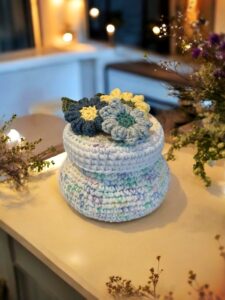
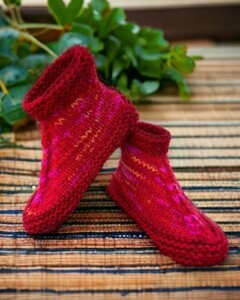
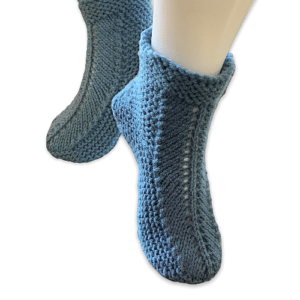
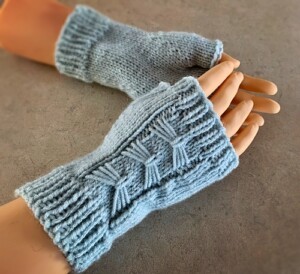
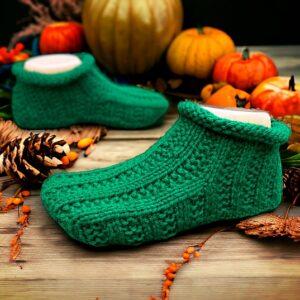
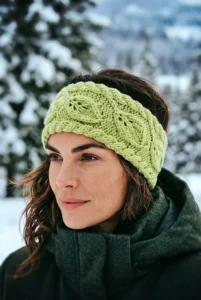
If you have discovered a new love for cables, I’ve got you covered! Click any of the photos below to start on any of my other free cable patterns I have on this website.


Things you need
Worsted weight (AKA – 4 or medium) yarn – one standard ball (515 yards / 471 m) will be more than enough with yarn left over.
1 set of size 4 mm (US size 6) single pointed needles
Cable needle
Tapestry needle (to work in ends)
Bobble or pom pom of your choice. You can make or purchase one.
Sizing Notes
First things first: let’s figure out how big to make the hat. When you’re going by age and gender, the measurements are only approximate – especially for kids. Adult sizes are more standardized: small, medium, large, and extra large.
If the person’s head is handy, measuring it directly is always best. That said, knitting isn’t an exact science. It stretches and contracts as needed, especially with the garter stitch inside the brim this hat uses.
Gauge
With size 4 mm (US size 6) needles or whatever size you need to obtain the correct number of stitches and rows. Be sure to check your gauge. It doesn’t need to be exact but the closer the better.
In garter st
17 sts = 4 inches or 10 cm
34 rows = 4 inches or 10 cm
Child Sizing
Data is based on World Health Organization and pediatric growth standards. You can also do an online search for sizing if you believe it to be inaccurate. Other organizations located in the USA, UK, etc give sizes as being slightly larger. A gentle reminder that this is knitting and it does stretch to accommodate close measurements. Close IS usually good enough in this case.
This design is for children (5 ish) and older. The band around the brim is quite thick and a heads any smaller than 20 inches (51 cm) will be too wide to fit comfortably on the forehead.

Adult Sizing
Small/Medium – 21 to 22 inches (53.5 – 56 cm)
Large/Extra Large – 23 to 24 inches (57 – 61 cm)
Band
Cast on 31
Row 1: K8 P2 K4 P2 K9 P2 K4
Row 2 (and all EVEN rows): P4 K2 P9 K2 P4 K10
* Row 3: K8 P2 C4F P2 C6F K3 P2 C4B
Row 5: as row 1
Row 7: K8 P2 C4F P2 K3 C6B P2 C4B
Row 9: as row 1
Row 10: as row 2 * Repeat from * to * until desired length shown in the chart.
End on ANY even row. It doesn’t have to be Row 10. Row 2, 4, 6, or 8 will also work.
Cast off on the RIGHT side. Break yarn. Band complete.
More of My Stuff On Etsy
Hat Top
With the RIGHT side of the hat facing you (the garter stitches at the top), pick up stitches along the edge. Pick up one stitch in the nub of each garter “ridge”, and for every group of five stitches picked up, pick up an extra stitch between the nubs.
If you need a little help with picking up the stitches, the video is cued up to the right spot in the video to help you out.
Please share this page!
More FREE patterns
Click the pic to read online!!




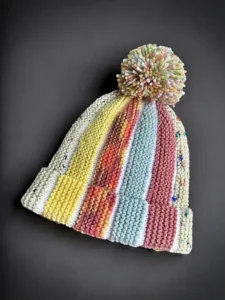
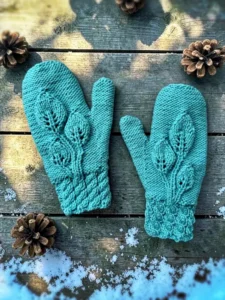
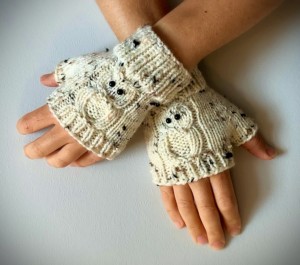



FREE Knitting Graph Paper for Colorwork Knitting
















Work your way down the length picking up a st in every 5 nubs, and picking up a st between the nubs. Knit whatever remaining sts remain after picking up between the ridge nubs (ie 4, 3, 2 or 1 st). The number of sts picked up will vary depending on the size. The number isn’t overly important. It’s still just knitting and stretches, after all. More detail is in the Hints and Tips section further down the page.
♥ Next row: Knit across
Next row: Purl across ♥ Repeat from ♥ to ♥ for the length calculated below.
Use the table below to determine the length you need. The measurement includes the stockinette AND the garter sections.

♦ Next row: K2tog across. Knit any single remaining sts.
Next row: Purl across
Next row: Knit across
Next row: Purl across.♦ Repeat from ♦ to ♦ until you have 12 sts or less. End when you complete the K2tog row with the correct number of sts.
Break the yarn. Leave a length of yarn long enough to sew the seam. Draw through all remaining sts. Sew seam.
Hints and Tips
Think of picking up the sts as this math equation. For every 5 sts you need one extra st. So for as many groups of 5 “ridges” you have of garter st for the band, that’s how many extra sts you need to pick up evenly.
If you want to make the hat more floppy on the top, have at it. Make it longer than what is given in the chart.
Abbreviations
K – Knit
P – Purl
sts – stitches
st – stitch
k2tog – knit 2 sts together. Watch this video to see how. How to K2tog or Knit 2 Together
Side note:
I use both versions of the terminology when it comes to cable stitches. I’ve been corrected that I’m using the wrong one for both occasions so it’s a no win for me. What I mean is that C4F is the same technique as C2F. Just like how C2B is the same as C4B. Do you think of it as the just the stitches you’re pulling or the number of stitches you’re using in total when you do it? It’s a personal choice, I guess.
C4F – Pick up the next 2 stitches with your cable needle. Pull the stitches to the FRONT of your work. Knit the next 2 stitches on your non-working needle. Knit the 2 stitches from the cable needle. Watch this video to see how. How to C4F or Cable 4 Forward
C4B – Pick up the next 2 stitches with your cable needle. Pull the stitches to the BACK of your work. Knit the next 2 stitches on your non-working needle. Knit the 2 stitches from the cable needle. Watch this video to see how. How to C4B or Cable 4 Back
C6F – This is made the same way as a C4B but is made over 6 sts. Pick up the next 3 stitches with your cable needle. Pull the stitches to the FRONT of your work. Knit the next 3 stitches on your non-working needle. Knit the 3 stitches from the cable needle.
C6B – This is made the same way as a C4B but is made over 6 sts. Pick up the next 3 stitches with your cable needle. Pull the stitches to the BACK of your work. Knit the next 3 stitches on your non-working needle. Knit the 3 stitches from the cable needle. Watch this video to see how.
Like all of my patterns you have my permission to sell and/or give away the physical items that you make using this pattern. You are NOT permitted to reprint this pattern in any form unless you have obtained my written permission to do so.