Stay warm this winter with this free knitted ear warmer headband pattern! It’s double-thick, soft, and designed to cover your ears and forehead for extra warmth. This is a great first knitting project for beginners to learn the basics, and a fast, satisfying knit for experienced knitters.



The pattern is free to read online and includes a complete how-to video tutorial, showing you every step from cast on to bind off to sewing the seam. This cozy winter headband makes a thoughtful handmade gift or a simple cold-weather project an experienced knitter can make in an evening.
For now, I’m going to make just this PDF version available to my supporters on Buy Me a Coffee and for sale on KraftiNook.com. You can use this either button to download and print it now.
Another way to avoid ads and pop-ups, get instant, PRINTABLE downloads of this pattern and others, is by becoming a Member. When you become a Website Supporter at $4/month, you’ll gain access to exclusive member only posts on Buy Me A Coffee. You can download as many patterns as you like for the same $4 each month. You can go to this page to learn more, become a member and support my work… Exclusive Member Area
If you enjoy the free patterns, please help me out by sharing this pattern with anyone you think may enjoy it. I’ve include these handy buttons to make it super easy. All you have to do is click!
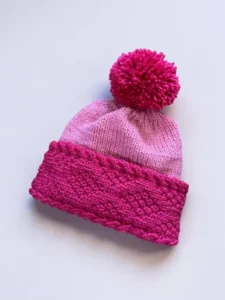
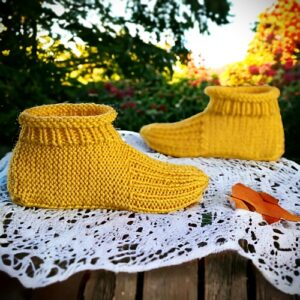
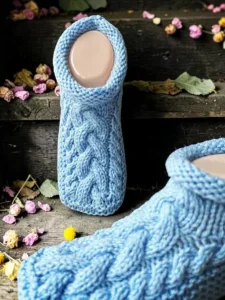
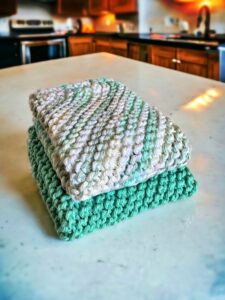
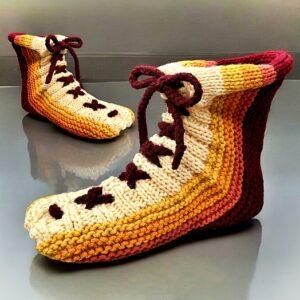
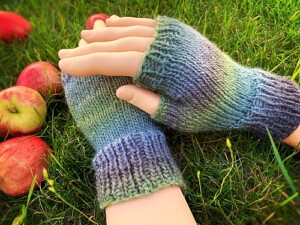
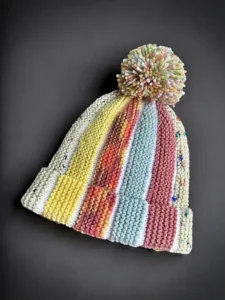
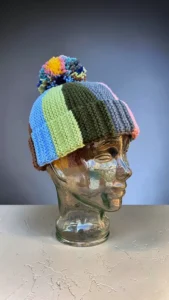
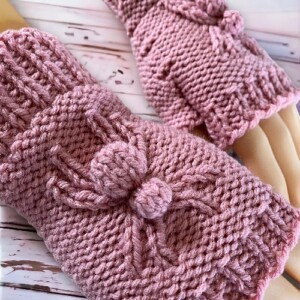
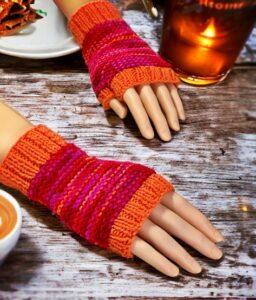
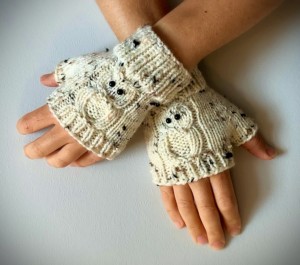
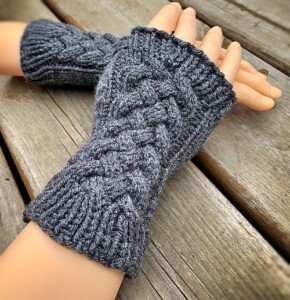
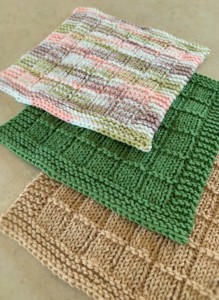
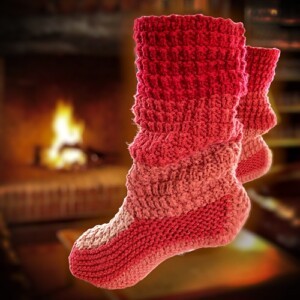
Once you’ve mastered all the stitches, you can easily move on to some other projects. Both my Easiest Beanie Winter Hat and Super Simple Fingerless Gloves use the same stitches and both have complete how-to videos to show you how to make them. If you are a lover of headband, you can try my Cozy Cable Headband. It also has a full how-to video! You can either click the links or the photo below to see the videos and patterns.


Table of Contents
Things You Need
Worsted weight yarn
4 mm (US 6) knitting needles.
Tapestry needles – to sew the seam and work in ends
Gauge
In stockinette
10 sts = 2 inches (5 cm)
13 rows = 2 inches (5 cm)
Sizing
I’ve included this handy chart showing how many stitches you need to cast on for every head size.
Watch the Video
Watch the full how-to video to make this pattern. All sections are divided by title cards to make it easy to find the help you need by scrolling through the video.

Pattern
Cast on according to chart
Row 1: Knit across for (9, 9, 11, 11, 11, 13, 13, 13, 13, 13, 15) rows.
Next row: P across
Next row: K1 * P2 K1 * Repeat from * to * to end of the row.
♫ Next row: P1 ♥ K2 P1 ♥ Repeat from ♥ to ♥ to the end of the row.
Next row: K1 * P2 K1 * Repeat from * to * to end of the row. ♫ Repeat from ♫ to ♫ (16, 16, 20, 20, 20, 24, 24, 24, 24, 24, 28) more times for a total of (19, 19, 23, 23, 23, 27, 27, 27, 27, 27, 31) rows for the ribbed section.
Next row: With the RIGHT side of the ribbing facing you. P across.
Next row: Knit across for (9, 9, 11, 11, 11, 13, 13, 13, 13, 13, 15) rows.
Cast off loosely.
Hints and Tips
When sewing the seams, please watch the video! You want the seam to be a slim as it can be. Anything bulky will rub on the head and be annoying after a while.
Make sure you STRETCH the seam along the length as you sew! This will be be the limit of the stretch of the final piece. If you sew the seam tight, there won’t be enough stretch to fit around the head.
The measurements for child ages are based on UN head size standards and are approximate common measurements for heads throughout the world. If you know the measurement of the head, use that instead of what I’ve given.
I’ve designed this pattern to fit nearly everyone. I didn’t go any younger because it’s my experience that babies rarely keep anything on their heads, let alone any headbands. They’re cute but completely impractical.
I have not done this, but if you want to make the head bands windproof, no knitting ever is, you can try putting felt, or another windproof material between the ribbing and garter stitch sections when you sew it up. You can either make it one long piece, taking into account the extra material to accommodate the stretch, or patches to go over the ear only. I’ve thought about whether to tack it in place for the ears, or just let it float around in there once you sandwich it together. I’m not sure which method would work better. Let me know if you try this.
Even if your headband doesn’t turn out perfectly and this is your first knitting project, don’t be discouraged! Keep going. You can still be proud of what you made and it still usable.
Abbreviations
K – knit
P – purl
st – stitch
sts – stitches
Please share this page!
More FREE patterns
Click the pic to read online!!







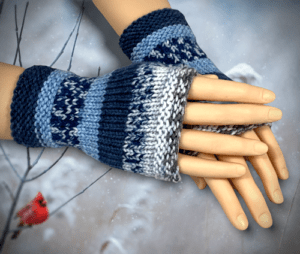
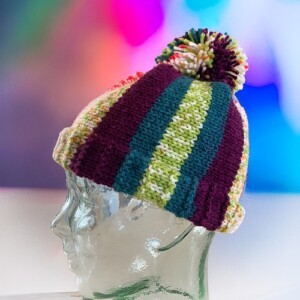

FREE Knitting Graph Paper for Colorwork Knitting












I thank you so much for this pattern. I have made several for kids at our schools who don’t have any headcovering, or who lost theirs. These are wonderful to make, and they are thick and warm for the little ears.
love easy, free patterns